Company profile
Rocky Mountain Construction is one of the most influential roller coaster manufacturers of the twenty-first century. The company began in Hayden, Idaho, from a practical construction background: Fred Grubb had worked on themed structures, water parks and wooden coaster projects at Silverwood. That origin is still visible in RMC's identity. The company thinks not only as a ride designer, but also as a constructor, fabricator and installer that understands how an existing structure behaves in the field.
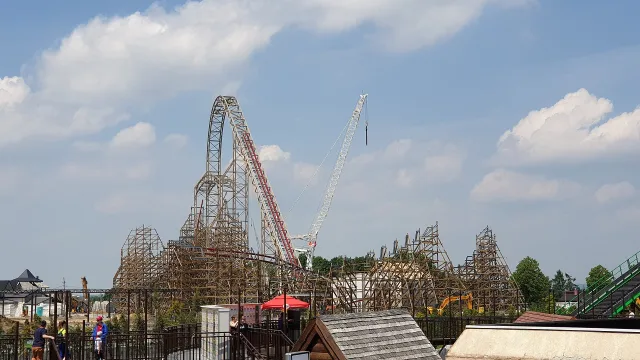
Its breakthrough came from the idea that aging wooden coasters could be not merely repaired, but radically reimagined. With I-Box Track, also known as Iron Horse Track, RMC combined wooden support structures with a steel running surface cut and welded from plate steel. This made much smoother turns, steeper drops, inversions and compact airtime elements possible. New Texas Giant at Six Flags Over Texas became the first major showcase in 2011. It was followed by projects such as Iron Rattler, Medusa Steel Coaster, Twisted Colossus, Steel Vengeance, Untamed and Iron Gwazi.
RMC also built ground-up wooden coasters with Topper Track, including Outlaw Run and Goliath, and developed Raptor Track for single-rail coasters with inline seating. RailBlazer, Wonder Woman Golden Lasso Coaster, Jersey Devil Coaster and YOY show how the company used narrower track and compact footprints to create new ride experiences. With 208 ReTraK, RMC returned to classic wooden coasters, but with a less radical replacement system that can preserve existing trains, mechanical systems and visual character while reducing maintenance.
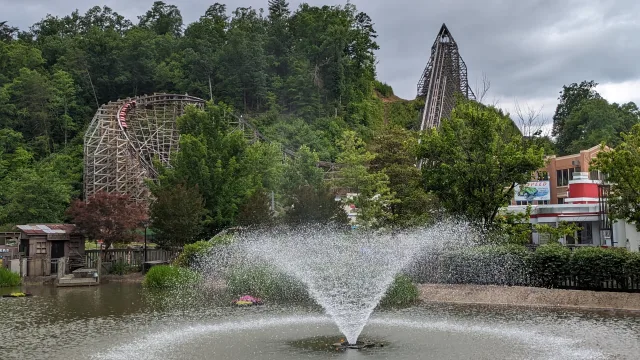
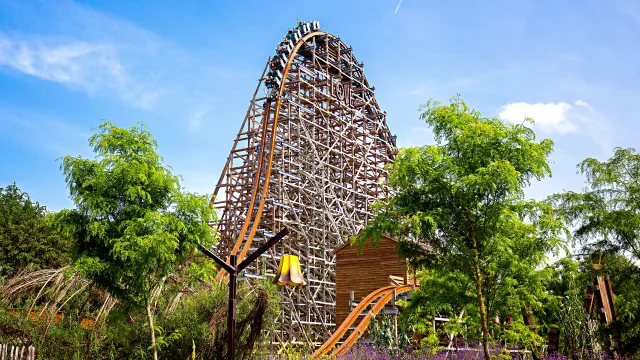
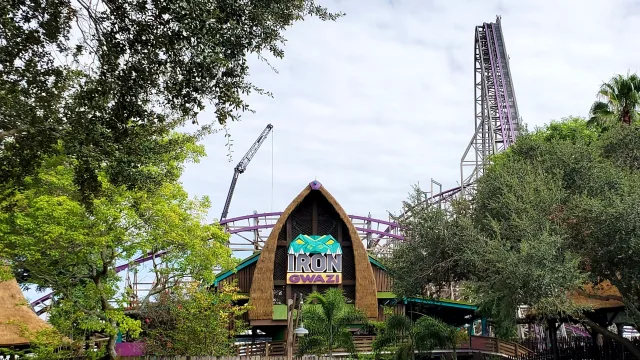
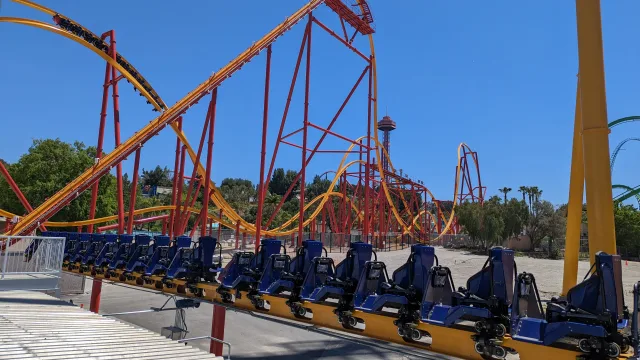
Within W8baan, RMC is highly visible through Walibi Holland, Busch Gardens Tampa and Six Flags Magic Mountain. Untamed transformed Robin Hood into a European I-Box hybrid with inversions and aggressive airtime. Iron Gwazi turned the former Gwazi structure into a world-class hybrid coaster with a 206-foot lift and a 91-degree drop. Twisted Colossus converted the historic Colossus into a Mobius-loop racing coaster. YOY brought a European first to Walibi Holland: a dueling Raptor single-rail coaster where riders choose between Chill and Thrill. Together, these projects show how RMC combines existing park assets, new technology and bold thrill design. For W8baan, Rocky Mountain Construction is especially relevant because the company represents several generations of attraction development: rebuilt wooden classics, compact single rail layouts and new European uses of American hybrid engineering. Its projects at Walibi Holland show how RMC applies its technology outside the United States, while Iron Gwazi and Twisted Colossus demonstrate how existing park infrastructure can be reshaped into modern headline attractions. RMC is therefore not only a manufacturer, but also a specialist in extending ride life, repositioning older assets and increasing the market value of established coasters.
History
The history of Rocky Mountain Construction begins before the official founding. Fred Grubb worked on themed and construction projects in the 1990s and became increasingly involved with wooden coasters, water parks and complex installations through Silverwood Theme Park. Together with Suanne Dedmon, he founded Rocky Mountain Construction in 2001. In its first phase, the company was primarily a specialized constructor, working on wooden coaster projects, water parks, relocations, zip lines, miniature golf, steel buildings and other themed assignments.
That practical construction base later became the foundation for RMC's major innovation. Around 2009, Alan Schilke, known from Arrow Dynamics and Ride Centerline, began providing design and engineering work for RMC. The collaboration between Schilke and Grubb led to a new kind of track fabrication in which complex steel track shapes are built from cut and welded plate sections rather than bent round pipe. The idea was patented as rolling vehicle track and became the technical core of I-Box Track.
New Texas Giant opened in 2011 and changed the perception of wooden coaster renovation. An aging wooden coaster could now be converted into a ride with steel smoothness, inversions, extreme banking and far less traditional track maintenance. RMC then grew quickly. Iron Rattler, Medusa Steel Coaster and Twisted Colossus confirmed the conversion model, while Outlaw Run and Goliath proved that Topper Track could also make ground-up wooden coasters more dynamic than the older category suggested.
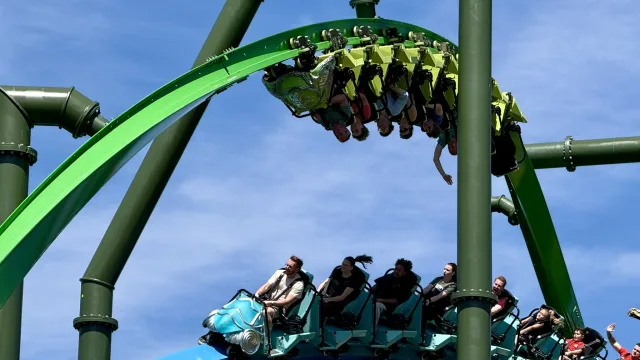
From 2016 onward, RMC became more visible internationally. Wildfire in Sweden, Untamed in the Netherlands, Hakugei in Japan and Zadra in Poland showed that the American niche manufacturer could operate far beyond North America. Raptor Track followed as a single-rail concept with RailBlazer and Wonder Woman Golden Lasso Coaster. In 2022, Iron Gwazi opened after delays and became one of RMC's most discussed projects. In 2023, RMC merged with Larson International, expanding the portfolio into classic flat rides and family attractions. Recent products such as 208 ReTraK, Wild Moose and YOY show that RMC is now balancing extreme hybrids with maintenance solutions, compact footprints and broader audiences.
Innovation and technology
The core of RMC's technology is steel-plate track fabrication. Its rolling vehicle track patent describes how complex curved structures can be built from planar components that are digitally designed, cut, positioned in jigs and welded. Instead of heating and bending round pipe, the process produces a rigid track shape with high dimensional accuracy. RMC emphasizes that its track is fabricated from steel plate and does not require bending during production, supporting precision and consistent ride quality.
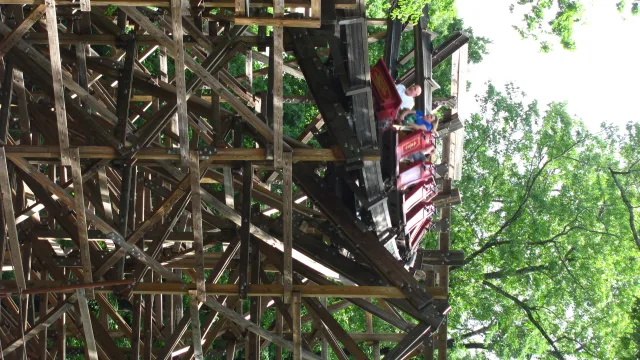
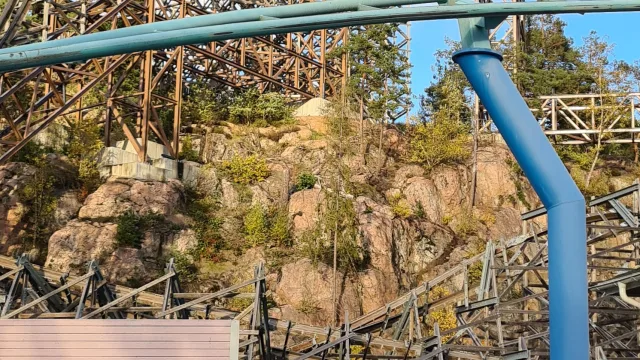
I-Box Track is the best-known result. The steel profile can be used on wood lattice, steel lattice or column structures and enables tight turns, fast transitions, inversions and strong airtime. For reimagined coasters, RMC often keeps existing wooden support structures while radically changing layout, force progression and ride identity. Its trains are designed for intense elements and Class 5 restraint systems, with custom theming available for each park.
Topper Track and 208 ReTraK are more focused on wood coaster character and maintenance reduction. Topper Track replaces the upper layers of wood with steel and made ground-up wooden coasters with inversions possible. 208 ReTraK is based on the I-Box philosophy, but is intended for refurbishing classic wooden rides while retaining existing trains, mechanical systems and controls. Raptor Track uses a single central rail and inline seating, allowing less steel, compact footprints and highly direct ride sensations. RMC also offers control systems, track inspection, train refurbishments, engineering analysis and installation support. The company combines construction experience with a highly controlled production process. Digital engineering, prefabrication and precise field installation allow existing wooden structures to be assessed, selectively reinforced and fitted with a new ride profile that delivers more dynamic pacing than the original layout.
Industry impact
RMC's impact is exceptional because it changed a category long seen as technically limited. Wooden coasters were loved for their character, but also associated with maintenance, roughness and limits in element selection. RMC showed that the same structures could be transformed into smooth, modern thrill rides with inversions, outward banking, zero-g stalls and extreme airtime. This created a new set of expectations around hybrid coasters.
For parks, the RMC model offered an attractive alternative to full demolition. A recognizable wooden coaster could keep its visual mass, location and nostalgic value while becoming an entirely new ride experience. New Texas Giant, Iron Rattler, Twisted Colossus, Steel Vengeance, Untamed and Iron Gwazi changed not only their own parks, but also how operators worldwide think about redevelopment of existing coaster assets.
RMC also influenced coaster language and marketing. Terms such as I-Box, Topper Track, Raptor and reimagined coaster became recognizable categories for fans and parks. The manufacturer popularized dense element pacing, compact ride design and hybrid aesthetics. With 208 ReTraK and Wild Moose, RMC also shows that its influence is not only about records, but also about maintenance, affordability, smaller parks and family-oriented expansion. RMC also changed how parks evaluate older wooden coasters. An aging ride does not always need to be removed; when the structure is suitable, it can be reused as the foundation for a modern audience draw with a recognizable historical identity.
Current operations
Rocky Mountain Construction remains active from Hayden, Idaho, and now presents itself under the Rocky Mountain Coasters brand. The official site describes RMC as a globally recognized manufacturer with projects in the United States, Mexico, Europe and Japan. The company offers a broad design and construction scope, including site surveying, engineering, fabrication, shipment of track sections, installation and optional full-service project delivery.
Its product families include I-Box hybrids, reimagined coasters, Raptor single-rail coasters, Family Moose, powered coasters, 208 ReTraK and service activities. RMC also provides control systems, track inspection, train refurbishment, parts, engineering analysis and installation support. Since the 2023 merger with Larson International, the portfolio has broadened through Larson's classic thrill, family, kiddie and portable rides. The merger communication states that RMC continues operating from Idaho and Larson from Texas, under RMC president and CEO Darren Torr. Current activities therefore span new builds, conversions, retracking, parts, inspections and post-delivery support. The Larson merger broadens the operational base, while RMC's coaster design and fabrication identity continues to be centered in Idaho.
Design philosophy
RMC's design philosophy is about maximizing ride value from existing or compact possibilities. On reimagined coasters, the company first considers what an old structure can carry, which visual identity should remain and how the new track can create a completely different dynamic. The result is often a ride with very high element density: sharp airtime, inversions, wave turns, outward banks and fast directional changes follow each other without long neutral sections.
At the same time, RMC's philosophy is technically pragmatic. Patented track fabrication, vertical integration and in-house production are meant to link design freedom with control over schedule, cost and installation. The company presents itself as a creator of custom solutions, improved classics and world-first experiences. In practice, an RMC attraction often feels like a renegotiation of the rules: wood becomes steel, nostalgia becomes extreme thrill and a restricted footprint becomes an opportunity for compact intensity. That philosophy explains why RMC projects are often discussed as reinterpretations rather than simple replacements. The recognizable structure, the park narrative and the technical renewal are expected to reinforce one another.