Company profile
Maurer Rides GmbH is one of Germany's most distinctive specialists in roller coasters and rail-bound transport systems. The company is rooted in Maurer, a steel and mechanical engineering firm that began in Munich in 1876 and later became an international group for structural steelwork, bridge technology, seismic protection and special motion systems. Within that technical environment Maurer began developing an amusement ride division in the 1990s, after taking over activities linked to BHS and Anton Schwarzkopf. That move combined coaster layout knowledge, vehicle engineering and German steel production in a new generation of compact roller coasters. Maurer Rides GmbH was founded in 2003 to focus more directly on the coaster market.
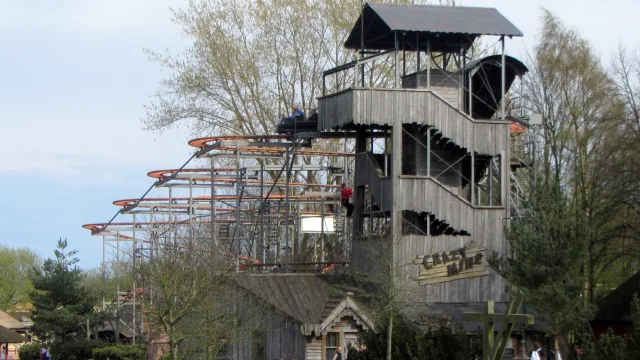
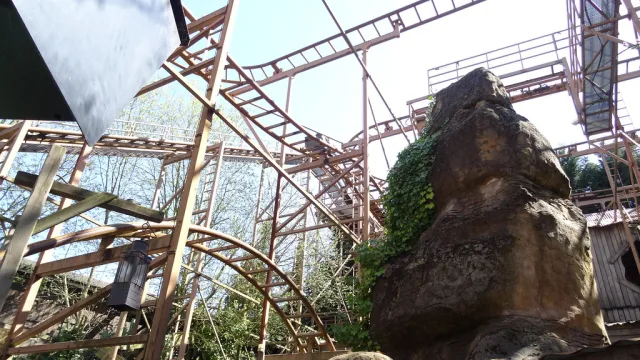
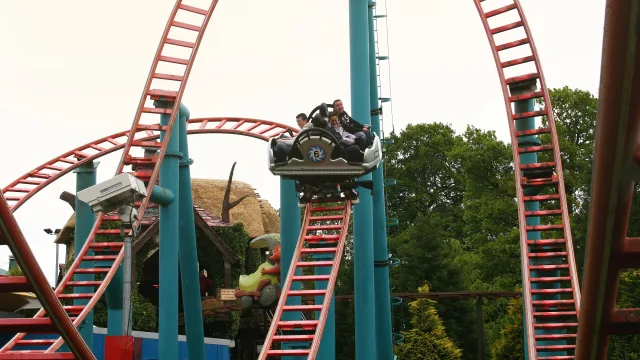
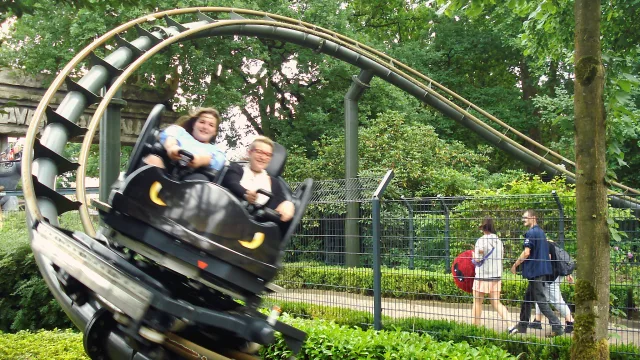
The company is known for several product families. The Wilde Maus continued the classic compact mouse concept with sharp turns and high throughput for fairs and parks. The Spinning Coaster gave the family coaster segment a more dynamic character by combining freely rotating four-person cars with compact layouts and strong repeat appeal. With X-Car and SkyLoop, Maurer moved toward more intense thrill coasters, paying close attention to vehicle ergonomics, inversions and limited footprints. Spike later became the technical flagship: a powered coaster family in which vehicles actively provide traction, acceleration, braking and, in some versions, passenger-controlled interaction.
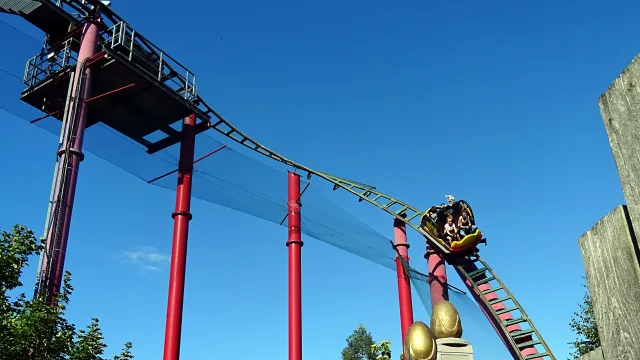
Maurer Rides therefore serves a wide range of applications. In Europe the brand is visible at Phantasialand with Winja's Fear and Winja's Force, at Bobbejaanland with Naga Bay, at Alton Towers with Spinball Whizzer, at Chessington with Dragon's Fury and Rattlesnake, and at Disneyland Paris with Crush's Coaster. Internationally, notable projects include Hollywood Rip Ride Rockit at Universal Studios Florida, Fiorano GT Challenge at Ferrari World, Laff Trakk at Hersheypark and the BOLT coasters on Carnival Mardi Gras, Carnival Celebration and Carnival Jubilee. The latter projects show Maurer's willingness to place coaster technology beyond the traditional theme park setting.
The company presents itself not only as a ride builder, but also as a developer of rail-bound solutions for unusual dynamic tasks. Its XTRAC simulations, three-dimensional bending methods, vehicle manufacturing, controls, service and training form an integrated engineering process. Since 2025, Maurer Rides has also used B Corp certification as part of its sustainability positioning. The result is a manufacturer that combines a long German steelmaking tradition with a modern focus on compact, interactive and technically distinctive attractions.
Maurer's position is therefore less that of a pure volume manufacturer and more that of a technical problem solver. Where other builders often start from large standard models, Maurer frequently seeks a tailored combination of vehicle, track profile and control logic. That explains why the company's reference list includes regional family coasters, major resort projects and cruise installations. The name is especially associated with situations where a compact plot, an existing building or an unusual operating environment still needs to deliver a complete coaster experience.
History
Maurer's history begins in 1876, when Friedrich Maurer established a small metalworking workshop in Munich. After his death, his sons Friedrich and Georg continued the business under the name Friedrich Maurer Söhne. During the twentieth century Maurer expanded through steel structures, bridge components, mechanical products and later seismic protection systems, becoming a broad technical company. The Frankfurter Ring site in Munich became important from 1925 onward, while the Beutler family became central to the company from the 1930s.
The move into attractions came much later. In 1993 Maurer took over activities that traced back to BHS and Anton Schwarzkopf, giving the company access to roller coaster engineering knowledge. Early Maurer coasters, including Wild Mouse variants and Venus GP in Japan, applied German steel construction to compact and exportable attractions. In the following years the Spinning Coaster systems and X-Car family followed, distinguishing Maurer from more conventional track builders.
Maurer Rides GmbH was founded in 2003 to concentrate the coaster activities. The following years brought projects such as Winja's, Spinball Whizzer, Dragon's Fury, Crush's Coaster, Sky Wheel, Abismo and Hollywood Rip Ride Rockit. Around 2014 the group changed its name and the rides portfolio was later marketed more independently. Since 2016 Maurer Rides has presented itself as a specialized entity with Jörg Beutler as a leading figure. The introduction of Spike from 2017 opened a new chapter, using powered coaster technology for parks, indoor projects, cruise ships and compact high-intensity layouts.
In the recent period, attention shifted toward the expansion of Spike, new international projects and a stronger sustainability profile. Maurer Rides continued to benefit from the group's long technical infrastructure: experience with heavy steel structures, test facilities, certified production and international project supervision. The manufacturer's history therefore has two layers. On one side stands the nineteenth-century Munich steel company; on the other stands the modern ride specialist that has built its own place in the roller coaster industry since the 1990s.
Innovation and technology
Maurer Rides' technical identity lies in the combination of steel construction, vehicle design, simulation and control systems. The company uses XTRAC for dynamic calculations and optimization of track layouts. Loads on rails, supports, vehicles and passengers are evaluated early in the design process. The results are linked to XTOOLS for structural drawings and production documents, creating a closer relationship between geometry and manufacturability.
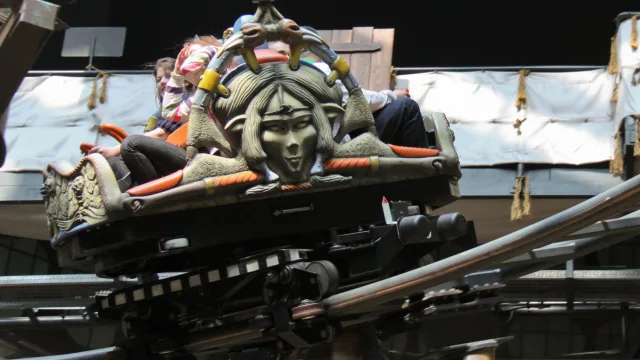
Maurer is also known for three-dimensionally bent tubular track, precision welding, vehicle frames and mechanical parts produced in close cooperation with Maurer SE's steel manufacturing. The X-Car line introduced a vehicle philosophy that allowed inversions without traditional over-the-shoulder restraints, emphasizing seat geometry and passenger freedom. The Spinning Coaster uses freely rotating vehicles in which mass, track profile and brake zones together shape the rotation experience.
Spike adds active propulsion to that base. Each vehicle uses traction on a special track structure, allowing speed, acceleration and braking to be controlled through software. Versions may include interactive throttles, boost functions, sound, LED effects, video and energy recovery. This enables compact layouts, cruise ship coasters and rides with repeatable but variable experiences.
An important result of this approach is Maurer's emphasis on measurability. Laser scans, comparisons between calculated and actual track geometry, and checks of dynamic parameters help refine ride comfort and structural safety. The same thinking appears in service and modifications: parts, software and mechanical systems are treated as one connected whole. For operators, this means that a Maurer ride is often managed not only as an attraction, but also as a long-term technical system.
Industry impact
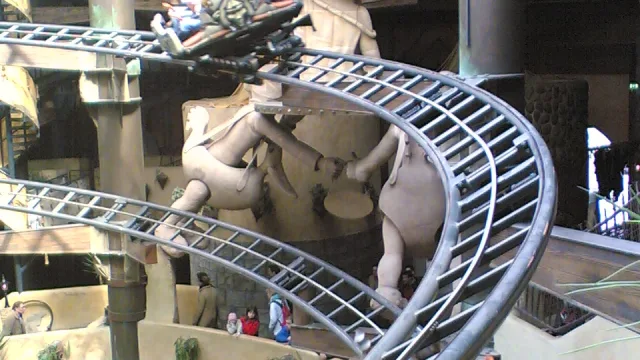
Maurer Rides has influenced the attractions industry mainly in niches where compact engineering and distinctive vehicles matter more than sheer scale. The Wild Mouse and Spinning Coaster families helped establish the idea that a relatively small footprint can still deliver an intense, capacity-ready coaster product. Winja's at Phantasialand showed how two spinning coasters with themed integration and surprise elements could anchor an indoor area. Crush's Coaster adapted the same principle to a Disney dark ride environment.
With X-Car and SkyLoop, Maurer offered an alternative to traditional looping coasters, emphasizing vehicles and inversions within limited space. Hollywood Rip Ride Rockit demonstrated how Maurer technology could be combined with a large multimedia-driven park experience. Spike broadened the discussion of what a powered coaster can be: not merely transport with propulsion, but a system in which acceleration, guest control, sound and software become part of the attraction.
The BOLT projects on Carnival ships are industrially significant because they brought coaster technology to a moving maritime platform. As a result, Maurer is often considered when parks, cruise operators and indoor developers need customized solutions beyond a standard catalogue.
Maurer has also bridged classic German fairground engineering and modern resort development. Many installations are not height or speed record breakers, yet they are references for combining intensity, capacity and narrative integration within tight constraints. The manufacturer has therefore influenced designers looking for non-linear ride experiences, rotating vehicles or active propulsion as alternatives to traditional gravity coasters.
Current operations
Maurer Rides operates from Kirchheim near Munich and works closely with the wider Maurer organization, whose headquarters and main production capacity are in Munich. The ride activities include sales, concept development, engineering, vehicle construction, controls, installation supervision, service and training. Maurer SE remains important for rail and vehicle production, while Maurer Rides focuses on the attractions market and the application of rail-bound transport systems.
The current portfolio includes Spinning Coaster, X-Car, Spike Racing, Spike Fun, people movers and material transport systems. Recent communication strongly emphasizes Spike projects, indoor solutions, cruise ship coasters, new high-capacity variants and sustainability. The company also supports existing installations, including older Schwarzkopf-related systems for which service and spare parts remain relevant.
The organization works with a relatively compact rides team while drawing on the group's specialized knowledge where heavy steelwork, certification or production capacity is required. This allows Maurer Rides to respond directly to customers while still relying on industrial scale. Current communication points to international sales, project support in Europe, Asia, the Middle East and North America, and a growing role for digital tools in operation, diagnostics and on-board media.
Design philosophy
Maurer Rides' design philosophy centers on controlled dynamics within limited space. The company does not primarily chase the largest track, but a layout in which vehicle, rail, software and themed context reinforce one another. This makes Maurer a frequent fit for parks that want to integrate a coaster into a building, skyline, cruise environment or compact themed area.
A second principle is technical individualization. Many Maurer projects are not simple catalogue copies, but combine existing product platforms with specific vehicles, track elements or operational requirements. Spike strengthens that philosophy by shaping the ride not only through gravity, but also through propulsion, interactive control and multimedia. The aim is an attraction that feels technically precise while remaining playful, surprising and repeatable for guests.
In that approach the visitor is not only a passenger, but increasingly a participant. In spinning coasters, variation comes from rotation and loading; in Spike systems it comes from speed, boosts and feedback. Maurer therefore designs with a dual responsibility: the ride must remain reliable and calculable for operators, while preserving for guests a feeling of choice, motion and unexpected energy.