Profile
About Barbieri Rides
Barbieri Rides is linked as manufacturer to 2 active attractions across 2 parks on W8baan.
You can temporarily save favorites in cookies. Create a free account or log in to use them on every device.
You have no favorite parks yet. Tap the star on a park to add one.
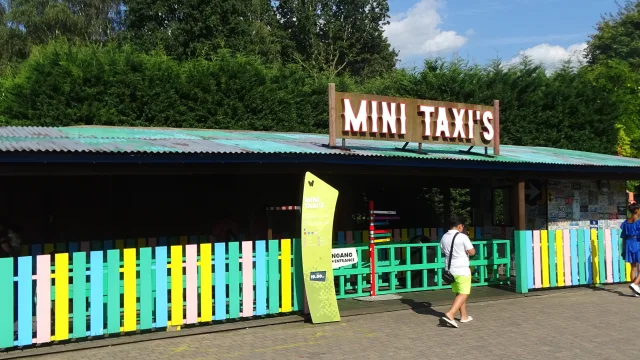
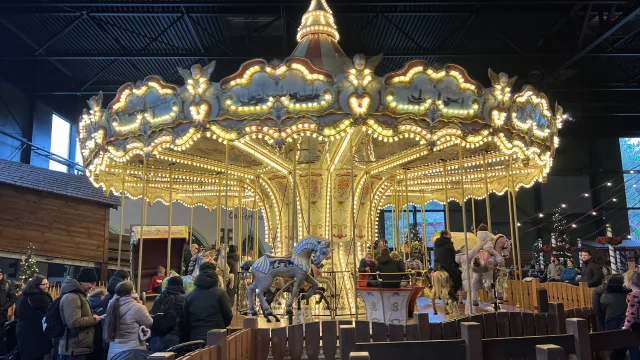
Barbieri Rides was an Italian amusement ride manufacturer from Reggio Emilia, founded in 1954 by the Barbieri brothers. The company began with bumper cars and bumper car buildings, later expanding into carousels, children’s rides, Ferris wheels, flat rides, water rides and roller coasters. In 2000 Barbieri merged with Preston to form Preston & Barbieri, which continues the technical and commercial legacy. For W8baan the manufacturer is relevant through Mini Taxi’s, Pferdekarussell and Karussell.
Barbieri Rides is linked as manufacturer to 2 active attractions across 2 parks on W8baan.
Share of measured operating time in which the rides were open. Outages and maintenance count as downtime; closed and unknown do not count.
16.8 h measured operating time
593.6 h measured operating time
953.4 h measured operating time
Spread of roller coaster lengths based on available RCDB data for this manufacturer's attractions.
Not enough data yet for a boxplot.
Barbieri Rides belongs to the Italian amusement ride tradition around Reggio Emilia, a region that produced several manufacturers of fairground and theme park equipment. The company was founded in 1954 by the Barbieri brothers and began with a relatively specialised product: bumper cars and the buildings in which those rides could operate. That origin remained important, because bumper cars require a combination of electrical supply, floor construction, vehicle engineering, impact-resistant finish and fast operation. From that technical base Barbieri gradually expanded into other family and children’s attractions. Carousels, mini bumper cars, telecombats, polyps, Rock and Roll rides, Ferris wheels and other classic park machines formed a catalogue that could serve both travelling showmen and permanent parks. Barbieri’s strength did not lie in one record-breaking attraction, but in reproducible, sellable and comparatively maintainable installations that gave parks and fairs a recognizable operating layer. In 2000 Barbieri merged with Preston, a company formed in 1986 by managers from the local amusement industry. The combined company became Preston & Barbieri and grew into a broader supplier of bumper cars, family rides, water rides, roller coasters, monorails and dark-ride-like systems. Official company information still presents the business as formed in 1954, with production in Reggio Emilia, about 20,000 square metres of factory area and 70 employees. For W8baan the Barbieri line is relevant because many small and medium-sized parks use such attractions as durable children’s and family infrastructure. Mini Taxi’s at Walibi Holland, Pferdekarussell at Phantasialand and Karussell at Toverland are not record machines, but they play an important role in routing, capacity and audience distribution. The wider Preston & Barbieri catalogue shows the same pattern: from Splash Battle and Flume Ride to Family Coaster and Mini Coaster. The manufacturer connects Italian craftsmanship with industrial standardisation and mainly supplies rides that must be reliable, recognizable and adaptable. A second reason the profile is relevant is the company’s position between travelling fairs and theme parks. Barbieri originated in products that had to be movable, recognizable and economically useful. Preston & Barbieri later also worked for permanent parks, FECs and international projects where theming, capacity planning and after-sales support mattered more. The manufacturer therefore bridges two worlds. A mini bumper car ride at Walibi Holland has different requirements from a Splash Battle in a themed area or a Family Coaster in an expansion park, but in each case the product must be a reliable mechanical system that operators can repeat every day. The official emphasis on spare parts, service and technicians underlines that. For parks, buying such an attraction is not a one-off transaction, but a maintenance relationship lasting years. That continuity is especially important for children’s and family rides, because downtime in small-scale zones quickly affects guest distribution and satisfaction.
Barbieri history begins in 1954 in Reggio Emilia, where the Barbieri brothers built a company around bumper cars. That was a logical start in post-war Italy: travelling fairs and permanent leisure venues needed compact, repeatable and comparatively affordable mechanical attractions. Bumper cars offered exactly that. They were social, visible, suitable for young and older guests and could be produced through a clear technical formula. In the following years Barbieri expanded into bumper car buildings and other traditional attractions. The company became part of a regional ecosystem of related Italian manufacturers, suppliers and technicians. Preston was formed in 1986, also in Reggio Emilia, by managers with experience in the same sector. The two companies moved toward similar markets and merged in 2000 to form Preston & Barbieri. That merger was not a rupture, but a scaling up. The new combination could offer a broader catalogue: not only bumper cars and family rides, but also water rides, monorails, roller coasters, dark-ride-like systems and park development. In 2009 Preston & Barbieri also acquired rights and assets from L&T Systems, expanding the product base further. During the 2000s and 2010s, Splash Battle projects, family coasters, Mini Coasters and carousels became visible in European and international parks. At the same time, the old Barbieri identity remained recognizable in the emphasis on bumper cars, carousels and compact family rides. The history therefore shows a typical Italian development: small specialised workshops grew through collaboration, mergers and product rights into a broader export manufacturer without completely losing the original craft base. The historical line should therefore be read not only as a company name, but also as a transfer of product culture. Barbieri brought experience with bumper cars, compact children’s rides and classic park machines; Preston brought management and scaling; later acquisitions added systems from other Italian companies. The result was a manufacturer not defined by one invention, but by the accumulation of catalogue knowledge. The acquisition of L&T Systems fits that pattern: existing designs and know-how were not discarded, but integrated into a larger offer.
The technology of Barbieri and Preston & Barbieri is broad, but revolves around several recurring principles: serial manufacturability, adaptable theming, safe family operation and robust daily use. In bumper cars the technical core lies in electrical supply, vehicle bodywork, floor contact, buffering, steering mechanics and a building capable of many short cycles. In carousels the focus shifts to the rotating platform, suspension, decorative finish, lighting, balance and a very predictable ride profile. In Splash Battles and flume rides, pumps, channels, boat guidance, interaction points and drainage are added. The later roller coaster line uses compact steel layouts such as Family Coaster, Mini Coaster, Anaconda and Spinning Coaster. These models are not designed as extreme thrill machines, but as usable family coasters with limited footprint, reasonable capacity and clear safety systems. Official product information emphasizes individual lap bars, self-standing structure options, modular installation and adaptation to different park environments. A key technical characteristic is the combination of standard product and customization. The basic mechanism can be repeatable, while colour, decoration, vehicle shape, façade and interaction are adapted to the park. This allows the same manufacturer to supply a children’s bumper car ride, a classic carousel, a Splash Battle and a compact roller coaster. The technical philosophy remains focused on operation: the ride must be safe to run, keep spare parts available, support training and remain internationally marketable. That technical breadth also has organizational consequences. A manufacturer offering such different products needs not only structural engineers, but also electrical specialists, scenic builders, welders, control-system knowledge, service planners and spare-parts logistics. Official information mentions nearby branches for FRP plastic and electrical components under the control of the engineering staff. That points to vertical coordination: bodies, decorative panels, electrical systems and mechanical frames can be developed close together. For international customers this matters because a ride often has to meet local standards, transport limits and operating habits.
Barbieri’s influence is most visible in the quiet infrastructure of family parks. Visitors often remember major roller coasters, but a park’s daily capacity also depends on bumper cars, carousels, children’s rides, small coasters and interactive water attractions. Barbieri and later Preston & Barbieri supplied exactly that layer. They helped parks distribute age groups, spread queue pressure and make areas attractive for families not only seeking thrill rides. The Italian origin matters here. Reggio Emilia and Emilia-Romagna developed a cluster of ride companies with knowledge of steel, decoration, vehicles, hydraulics and electromechanics. Barbieri was part of that network and contributed to the international reputation of Italian family and fairground attractions. After the merger with Preston, the impact became broader. Splash Battle projects, compact roller coasters and carousels appeared in parks across Europe, Asia, the Americas and the Middle East. The impact is therefore not one revolutionary invention, but a global pattern of usable attractions. For W8baan that is important because the manufacturer shows how small rides help define a park’s character: Mini Taxi’s, Pferdekarussell and Karussell are accessible, but essential for families, young children and quiet points inside larger parks. The influence is also visible in how parks professionalized their children’s areas. A small bumper car ride or carousel was no longer merely filler, but part of a package involving safety, appearance, capacity and service. Preston & Barbieri could combine such attractions with larger family rides, allowing operators to buy several levels of their offer from one supplier. That model helped standardize the family attraction market.
Barbieri Rides no longer exists as a separate independent manufacturer, but the line remains active within Preston & Barbieri. The current company is based at Via Cocchi 19 in Reggio Emilia, presents itself as an Italian amusement manufacturer since 1954 and offers a catalogue of about fifty machines. Official information mentions a 20,000 square metre factory, 70 employees, worldwide sales and after-sales support with spare parts and service. Current product groups include bumper cars, family rides, roller coasters, thrill rides, water rides, second-hand stock and custom services such as design, customization, after-sales and full park development. The market position is that of a medium-to-large specialised supplier for parks, FECs and travelling showmen. For historical Barbieri installations this means the original name has disappeared, but knowledge, product families and parts logic continue through the current Preston & Barbieri organization. The current website also emphasizes design and customization, fitting a market in which standard machines increasingly need to look park-specific. For operators this means Preston & Barbieri can offer both catalogue selection and visual adaptation, with after-sales as a significant part of the value proposition.
Barbieri’s design philosophy can be described as accessible Italian family engineering. A ride had to look attractive, but above all be recognizable, safe, commercially usable and maintainable. In bumper cars that meant strong vehicles, simple operation and an attraction able to process many guests in short cycles. In carousels it meant combining decoration, light, movement and ride comfort into a calm point in the park. After the merger with Preston, that philosophy was applied more broadly to water rides, coasters and interactive attractions. The company usually does not seek the extreme thrill limit, but a balance between fun, capacity, appearance and operation. The ability to combine standard mechanics with custom theming is important: a park can buy a familiar ride and still add its own identity. That makes Barbieri and Preston & Barbieri especially strong in attractions that work in the background for many years, yet are essential for families. Durable.
The Barbieri brothers establish Barbieri Rides in Reggio Emilia, initially focused on bumper cars and bumper car buildings.
The Barbieri line grows from bumper cars into kiddie rides, Ferris wheels, telecombats, polyps, Rock and Roll rides and other classic attractions.
Preston is founded in Reggio Emilia by managers from the local amusement industry.
Preston & Barbieri lineage appears in small coaster records such as Wacky Worm and Grand Canyon installations.
Barbieri Rides merges with Preston to form Preston & Barbieri.
Karussell opens at Attractiepark Toverland as a Preston & Barbieri carousel.
Splash Battle at Walibi Holland opens, representing the company’s move into interactive water rides.
Projects such as Banana Battle at Bobbejaanland broaden the company’s interactive water ride visibility.
Preston & Barbieri acquires rights and assets from L&T Systems, expanding the product base.
Master Thai at Mirabilandia highlights the company’s Double Race coaster product.
Stampbanan at Liseberg opens as a compact Mini Coaster / Mine Vagon installation.
Der Kleine Zar at Hansa-Park shows continued use of Preston & Barbieri compact family coaster technology.
Draken at Energylandia and other installations show the company’s continuing international family coaster market.
The company continues from Reggio Emilia with about fifty product models, global service and a factory base presented by the official website.
Walibi Holland · 1994
Phantasialand
Attractiepark Toverland · 2001
Walibi Holland · 2005
Bobbejaanland · 2008
Phantasialand · 2011
Movie Park Germany · 2008
Movie Park Germany · 2007
Mirabilandia · 2007
Mirabilandia · 2011
Liseberg · 2013
Hansa-Park · 2017
Energylandia · 2019
Leolandia · 2018
Cita-Parc · 2018
Parc du Bocasse · 2019
Worlds of Fun · 1993
PowerPark
Chessington World of Adventures
Chessington World of Adventures
MagicLand
Legoland California
DaftöLand · 2018
2 linked attractions