Company profile
HUSS Park Attractions is one of the best-known names in the world of flat rides. The company operates from Bremen and builds on a brand history that begins with HUSS Maschinenfabrik, founded in 1919. That original company spent decades producing machine parts and silencers, especially for the shipbuilding industry, before entering fairground and amusement ride construction in 1969. From the 1970s onward, HUSS became a reference point for mechanical thrill rides: attractions that do not depend on roller coaster track, but on controlled rotation, swinging, tilting, lifting and gravity.
The modern HUSS profile has two layers. One is the historic catalogue, with classics such as Enterprise, Pirate Ship, Troika, Ranger, Rainbow, Break Dance, Top Spin, Condor, Frisbee, Giant Frisbee, Magic, Flipper, Shot'n Drop and Topple Tower. Many of these models appeared at fairs and fixed parks across the world and shaped the public image of large mechanical flat rides for decades. The other layer is today's Huss Park Attractions GmbH, which continued the brand name, service organization and new-generation product line after the 2006 reorganization. The current company presents itself as a designer, builder and supporter of attractions for theme parks, amusement parks and fairgrounds.
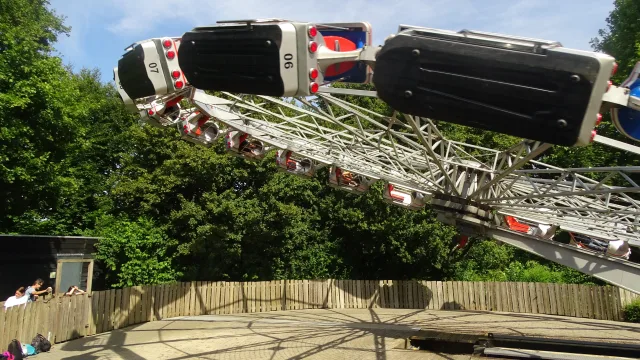
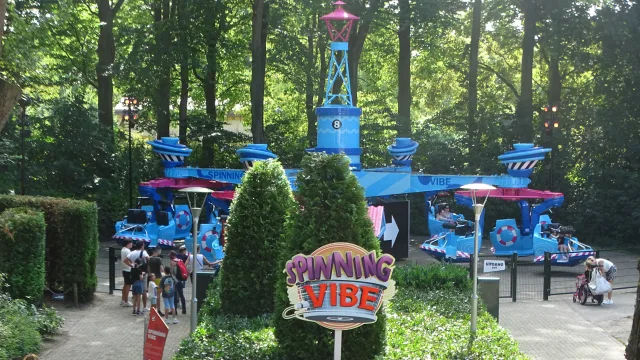
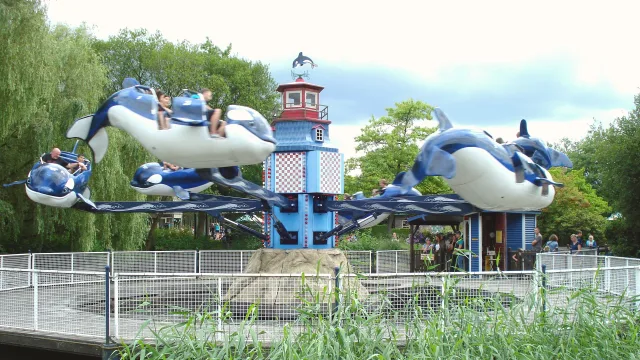
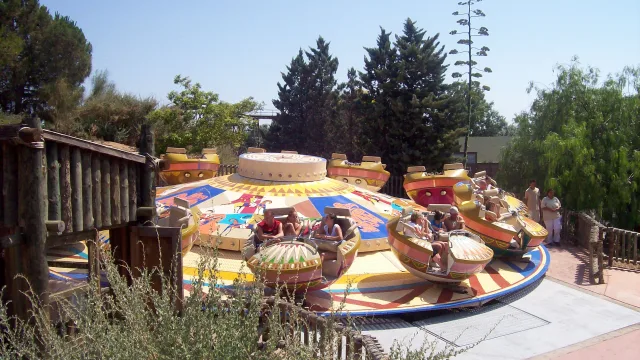
The appeal of HUSS lies in the combination of technical intensity and recognizable ride forms. A Top Spin is instantly identifiable by its two arms and freely rotating gondola; a Break Dance by its rotating platform and crossing gondola paths; an Enterprise by the way it builds vertical rotation from an angled wheel. These rides are theatrical machines: they do not only give riders a physical sensation, they also show that sensation to guests around the plaza. This explains why HUSS installations often function as anchors in squares, themed lands and fairground routes.
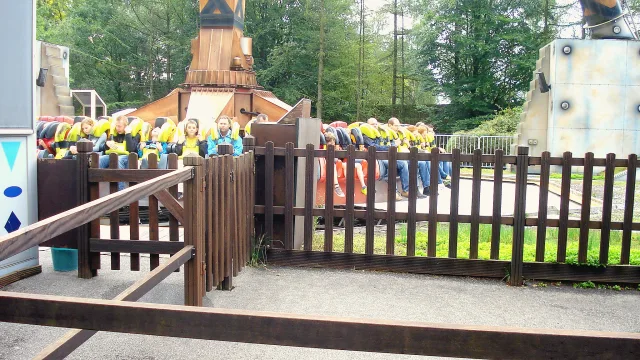
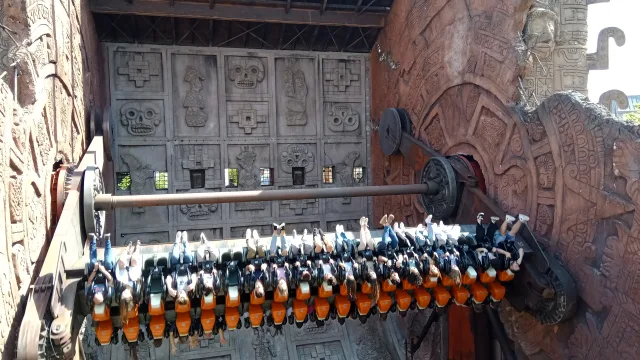
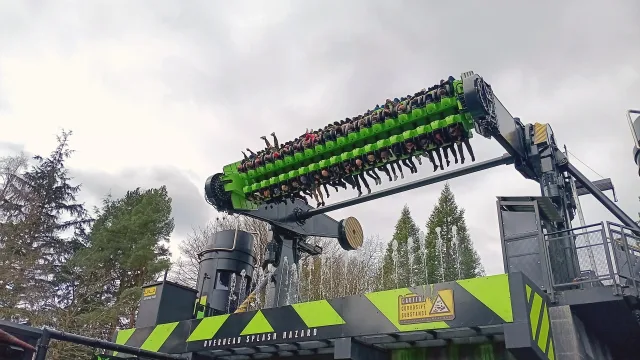
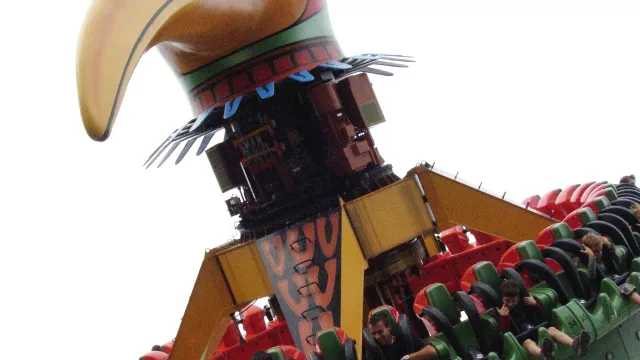
Within the W8baan context, HUSS is visible at parks such as Phantasialand, Europa-Park, PortAventura, Walibi Holland, Bellewaerde, Bobbejaanland, Hansa-Park and Alton Towers. Talocan at Phantasialand shows how a HUSS Suspended Top Spin can be transformed with scenic design, fire, water and choreography into a full theatrical ride. Sledge Hammer at Bobbejaanland presents the Giant Frisbee as a major park thrill. Toxicator at Alton Towers demonstrates that the Top Spin family remains relevant in recent projects. HUSS is therefore not just a supplier of individual machines, but a brand whose mechanics, silhouette and show value are deeply embedded in European attraction culture. This combination of heavy mechanics and public legibility makes the brand valuable for parks that want to fill an area not only with capacity, but also with motion, sound and visible anticipation.
History
The origin of HUSS lies in Bremen, where HUSS Maschinenfabrik was founded in 1919. Available sources identify the father of Klaus Huss as the founder, but do not consistently provide a given name; for that reason no personal founder name is entered here. For about fifty years the company worked mainly in mechanical engineering and the shipbuilding supply industry, producing parts, structures and silencers. That technical base would later matter: HUSS did not come from show design or scenic work, but from mechanical fabrication.
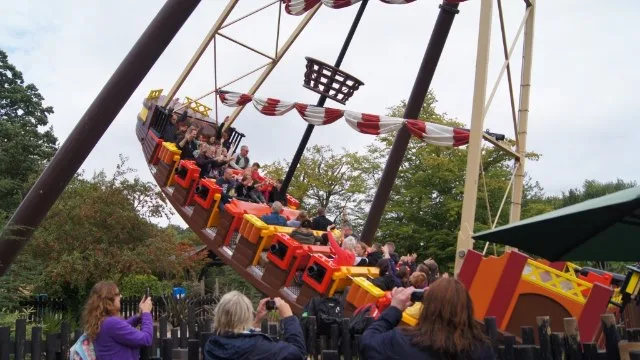
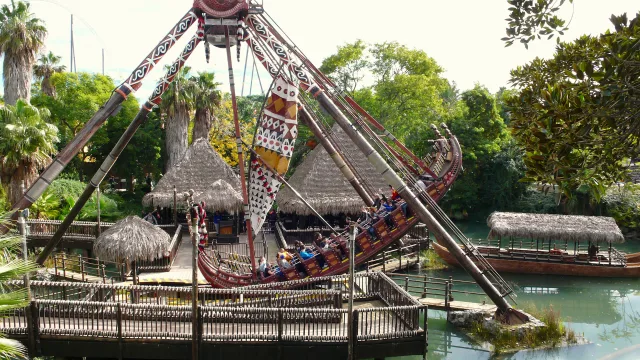
In 1969 HUSS began building fairground and amusement ride equipment. Klaus Huss took over the business in the early 1970s and positioned it during a period when European fairs, family parks and the first modern amusement parks were expanding strongly. The 1970s and 1980s became decisive. HUSS developed or popularized ride types such as Enterprise, Pirate Ship, Ranger, Rainbow, Troika, Break Dance and Top Spin. These machines combined relatively compact footprints with striking motion and strong spectator value, making them suitable for travelling operators as well as fixed parks.
A notable episode was the connection with Arrow Development. In 1981 Huss Maschinenfabrik acquired the American ride builder Arrow, creating the Arrow-Huss name. That period produced several large roller coaster projects and technical cross-pollination, but also financial pressure. After Arrow-Huss entered bankruptcy in the mid-1980s, Arrow continued in the United States as Arrow Dynamics, while HUSS in Germany was reorganized as Huss Maschinenfabrik GmbH & Co. KG. The German company refocused on flat rides and large mechanical park attractions.
A further break came in 2006, when the original HUSS Maschinenfabrik was declared insolvent. Huss Park Attractions then emerged as a new company around the brand, product rights, an international customer base and manufacturing capacity in Hungary. Since then the emphasis has been on new generations of existing concepts, technical support, spare parts and modernization. Product lines such as Condor 2G, Enterprise 2G, Break Dance 5, Top Spin Suspended, Giant Frisbee 40/50 and immersive variants show how HUSS reuses its historic ride forms. Recent installations at Alton Towers, Liseberg, Legoland California and parks in Asia show that the brand remains relevant, even though the corporate structure has changed significantly.
Innovation and technology
HUSS technology is about controlling large moving masses in a way that feels intense to riders while remaining repeatable for operators. The classic products often use a limited number of main movements that are mechanically combined: rotation, swinging, lifting, tilting and free spinning. In a Top Spin, two arms are synchronized with a gondola that can move around its own axis. In a Giant Frisbee, a large disc on a pendulum arm is combined with rotation. In an Enterprise, a rotating wheel gradually rises toward a near-vertical position, creating centrifugal forces and visual tension.
The technical reputation of HUSS comes from heavy steel construction, high-load drive systems, hydraulics, electrical control and a design philosophy in which the motion itself becomes the show. Many attractions are designed to remain visible on plazas: the audience sees the gondola turn, the arm rise or the ship swing. This makes the machine both ride and advertisement. For permanent parks that visibility is valuable, while travelling operators benefit from recognizable silhouettes and compact assembly.
The current HUSS lines combine historic mechanics with modern safety, control and thematic integration. According to recent product information, Break Dance 5 uses a more powerful and faster interpretation of the classic Break Dance, with individual restraints, modern operation and the option to turn lighting, sound and operator position into show elements. Top Spin Suspended is offered with programmable ride patterns, customizable effects and reference installations at parks such as Phantasialand and Alton Towers. The service organization supports old and new installations with spare parts, inspection, refurbishment, redesign, repair and technical assistance.
What is technically distinctive is especially longevity. HUSS communicates that many early models remain in operation after decades. That requires material strength, inspectability, replaceable components and a parts chain that does not end at the sale. The engineering philosophy is therefore less about a single first-of-its-kind event than about a machine that can generate revenue for decades, often with new theming or control systems.
Industry impact
HUSS changed the international attractions industry above all by turning the flat ride into a headline act. Before large steel coasters became the dominant park icons, Enterprise, Pirate Ship, Ranger, Rainbow, Break Dance and Top Spin could already perform a similar role: a recognizable silhouette, a crowd of spectators around the plaza and a ride that felt larger than its footprint suggested. HUSS therefore gave fairs and parks a way to create major thrill value without building a roller coaster project.
Its influence is also visible in the language of attraction design. Many manufacturers now speak about theming, programmable ride patterns, retrofit, refurbishment and long-term service, but HUSS models forced that discussion early because they last for decades and are often re-dressed. Talocan at Phantasialand is a key example: the same mechanical basis as a Suspended Top Spin becomes, through scenery, water, fire and soundtrack, a ride that is as much show as machine.
HUSS also filled the middle ground between family attraction and extreme thrill ride. Break Dance, Magic, Troika and Pirate Ship are intense enough for teenagers, yet understandable enough for broad audiences. Giant Frisbee and Top Spin function as clearer thrill anchors. The catalogue has therefore helped generations of operators program plazas with recognizable, maintainable machines.
Current operations
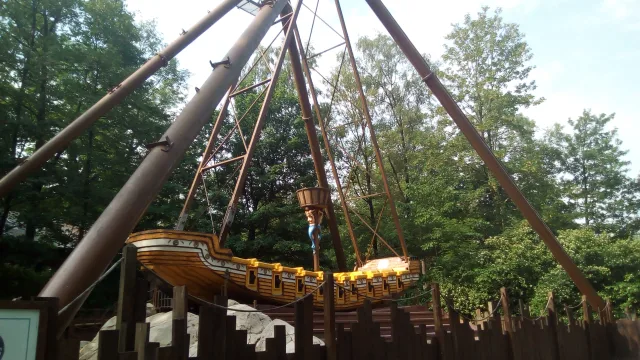
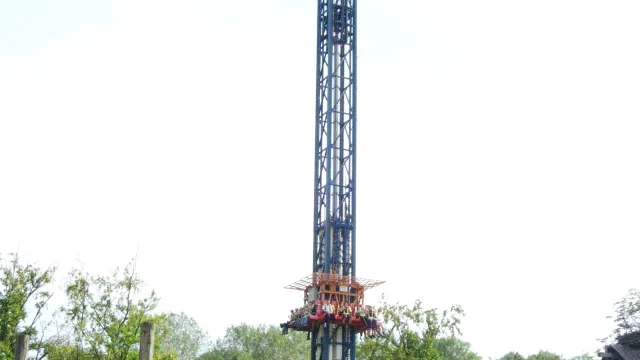
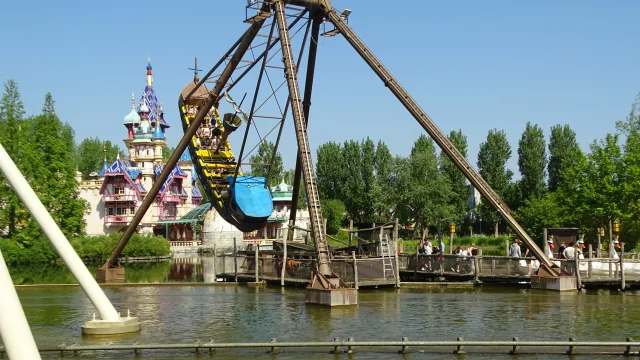
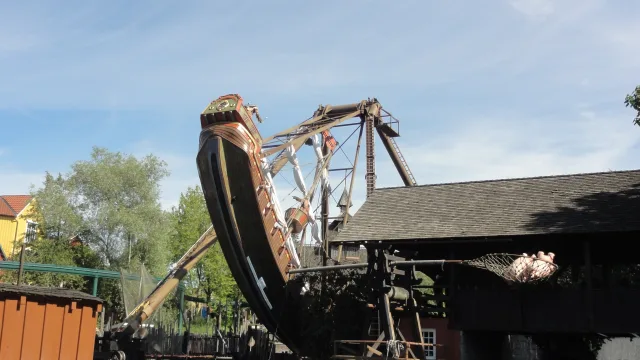
The current Huss Park Attractions GmbH is based at Emil-Sommer-Strasse 4-6 in Bremen. The company sells new attractions, develops variants of classic HUSS concepts and supports existing installations through Huss Parts & Service GmbH. Its official product structure includes thrill rides, family-thrill rides, family rides and immersive rides. Examples include Top Spin Suspended, Giant Frisbee 40/50, Shot'n Drop, Break Dance 5, Enterprise 2G, Pirate Ship, Condor 2G, Airboat, Sky Tower Multimedia and Movie Base XS.
Operations include design, project development, engineering, sales, installation support, spare parts supply, inspection, refurbishment, redesign and repair. The service proposition is important because many HUSS attractions remain in operation for decades and are often re-themed. Recent news items show activity at Legoland California, Liseberg, Alton Towers, Adventure World, Rainbow's End and parks in China. HUSS therefore works both on new machines and on extending the life of its global installed base. Its present role is therefore broader than new construction alone: HUSS also protects a technical heritage that still carries guests every day in many parks.
Design philosophy
HUSS design philosophy starts from visible mechanics. A HUSS attraction should be understandable before the guest boards: arms, discs, ships and gondolas show how the forces will act on the body. That gives the ride an almost architectural honesty. The machine does not hide the fact that it rotates, swings or tilts; it turns that movement into the central spectacle.
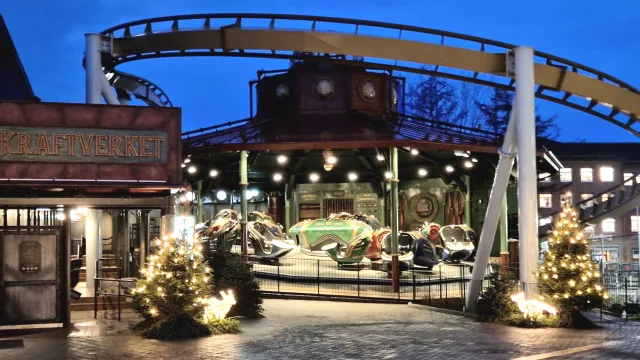
At the same time, the philosophy is not purely mechanical. The current HUSS positioning emphasizes that every ride should be adapted to the customer's story. Theming, lighting, sound, ride programs and operator interaction are used to place a standard mechanism inside a park identity. Talocan, Kraftverket and G-Force show three different directions: ritual spectacle, cyberpunk energy and child-friendly spaceflight. The basis remains heavy German mechanics, but the destination is a recognizable show experience that can keep evolving for many years. Design decisions are therefore judged by emotion, maintenance and repeatability at the same time. A strong HUSS ride should attract from a distance, build anticipation in the queue and still show the same clear motion after thousands of cycles.