Company profile
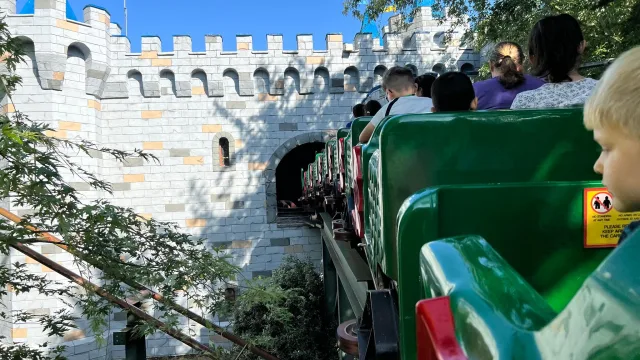
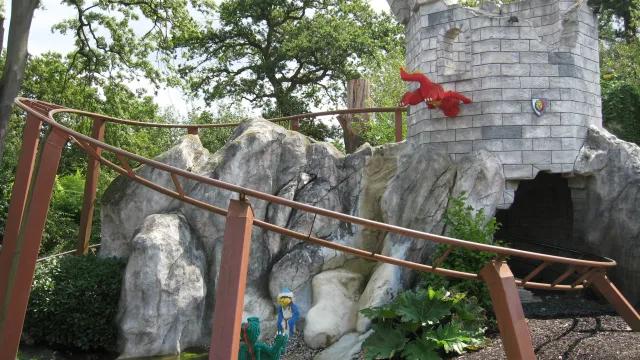
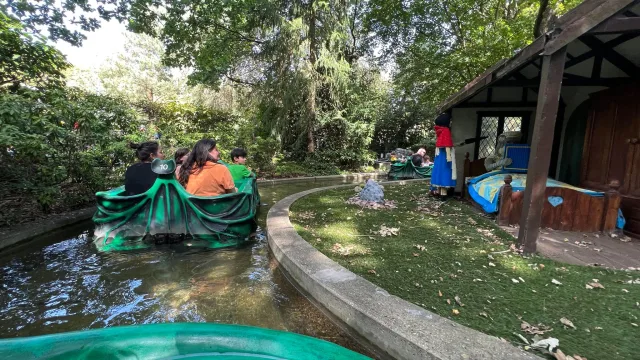
WGH Transportation Engineering was a small but versatile British engineering firm that crossed the boundary between industrial transport systems and leisure rides. Secondary company sources describe WGH as founded in 1989 by Andrew Howarth, John Martin and Tony Brown, with roots in Gyro Mining Transport and expertise in suspended transport systems, funiculars and mechanical movement. That background explains why WGH never felt like a classic roller coaster manufacturer with a large catalogue. It did build six roller coasters, but its wider reputation lay in bespoke transport: suspended dark rides, boat rides, museum rides, inclined lifts, log flumes and unusual rail or cable systems. Within W8baan, WGH is most visible through LEGOLAND Windsor. The Dragon opened in 1998 and became the park’s first roller coaster. LEGOLAND’s official page presents it as a knightly ride through the castle, with LEGO models, a red dragon and an outdoor coaster section. RCDB and Coasterpedia list WGH Transportation as the make, with a steel family coaster, dark/show section, booster wheel lift hills, 423 metres of track, about 50 km/h, no inversions and trains carrying 28 riders. Dark Ride Database adds the division of roles: LEGO designed and themed the ride, WGH supplied the ride system and Technovations handled technical installation. Dragon’s Apprentice opened in 1999 as the smaller introduction coaster in Knight’s Kingdom. LEGOLAND describes it as a mini rollercoaster for younger knights in training; RCDB lists WGH as the make, with a booster wheel lift hill, six cars and twelve riders per train. Outside LEGOLAND, WGH built Rhombus Rocket and Jellikins Coaster at Fantasy Island, Spook Express at Joyland and Green Dragon at GreenWood Forest Park. Green Dragon was especially distinctive because it connected WGH’s funicular expertise with a people-powered coaster concept. The University of Sheffield archive description and Explore Your Archive also mention projects such as The London Dungeon boat ride, an inclined lift at Blists Hill Victorian Town, Wallace & Gromit at Blackpool Pleasure Beach, the Titanic Experience dark ride system and recommissioning work for Dreamland Margate. In 2016 WGH ceased independent trading when Stage One Creative Services acquired the company. The profile is therefore historical, but highly relevant: WGH shows how transport engineering can form its own route into attraction design. As a manufacturer, WGH is therefore most interesting in the category of compact, integrated systems. It did not develop a recognisable standard family like larger coaster builders, but adapted drive method, vehicle type and route to the story, available building and required guest flow. That makes the LEGOLAND rides and heritage projects useful reference points for parks seeking an attraction where transport, scene setting and family-friendly tension meet.
History
The history of WGH Transportation Engineering begins in 1989, but the technical roots are earlier. Founders Andrew Howarth, John Martin and Tony Brown had experience at Gyro Mining Transport, a company that supplied transport systems for mining. As the British mining sector contracted, that knowledge was reapplied in leisure, heritage and visitor transport. The shift fits a wider pattern in British manufacturing: techniques from heavy industry and mining found a second life in museums, theme parks and visitor centres. WGH’s first known leisure projects were not immediately roller coasters, but suspended or guided transport systems. Archive descriptions mention a long list of projects, including the Annie McLeod Experience Ride at New Lanark, The London Dungeon boat ride, an inclined lift for Blists Hill Victorian Town and later the dark ride for Titanic Experience in Belfast. Between 1995 and 2004 WGH built six roller coasters. Rhombus Rocket and Jellikins Coaster appeared at Fantasy Island, The Dragon and Dragon’s Apprentice at LEGOLAND Windsor, Spook Express at Joyland and Green Dragon at GreenWood Forest Park. The Dragon was significant for LEGOLAND Windsor because it became the park’s first coaster and brought the dark ride approach of the international Dragon formula to England. Dragon’s Apprentice complemented it as an accessible mini coaster for younger visitors. WGH also continued working on heritage and themed rides. Explore Your Archive mentions Wallace & Gromit at Blackpool Pleasure Beach and recommissioning of Britain’s oldest roller coaster at Dreamland Margate in 2014. In March 2016 WGH ceased to be an independent company when Stage One Creative Services acquired it. That ended an independent player that was never high in volume, but formed a striking bridge between technical transport solutions and compact attractions. The acquisition did not make the existing installations irrelevant: because they were bespoke, they continued to depend on documentation, local knowledge and targeted maintenance. WGH is therefore now reconstructed mainly through operating rides, archives and project references.
Innovation and technology
WGH’s technical background lies in guided transport. From mining systems, the company was familiar with reliability, limited space, mechanical drive and vehicles moving on rails, cables or guides. In amusement parks this translated into small steel roller coasters, suspended dark rides, boat rides, inclined lifts and funiculars. The Dragon is the best W8baan example. The ride combines an indoor dark/show section with an outdoor coaster layout. RCDB and Coasterpedia list multiple booster wheel lift hills, no inversions, 423 metres of track and seven-car trains carrying 28 riders. The technology had to move slowly and controllably through the castle section, then transition into faster coaster dynamics while remaining within a family profile. Dragon’s Apprentice is simpler: a mini coaster with booster wheel lift hill, a single six-car train and twelve riders. That made it suitable as an entry point for younger visitors. WGH’s broader technology appears in suspended ride systems such as Taikasirkus and Time Ride, and in Green Dragon, where funicular and coaster principles came together in a people-powered system. The core was not high speed, but mechanically appropriate solutions for specific sites. That also explains WGH’s presence in museums and heritage centres, where routing, capacity, reliability and guest comfort matter more than thrill records. A recurring technical characteristic is the preference for controlled movement rather than spectacle for its own sake. Tire lifts, guided routes, low speeds in show spaces and compact steel layouts made it possible to combine capacity, accessibility and story rhythm. In existing buildings that required careful integration with evacuation routes, floor levels, sound, maintenance access and themed cladding.
Industry impact
WGH Transportation Engineering did not have the impact of a global roller coaster giant, but it mattered as a British niche builder that brought technical transport knowledge into the leisure world. At LEGOLAND Windsor, WGH made an important contribution to the park’s early identity. The Dragon gave the park a first coaster that did not simply run outside on rails, but began as a dark ride inside a LEGO castle. Dragon’s Apprentice complemented it with an accessible children’s coaster. Together the two rides gave Knight’s Kingdom a ride logic beyond static scenery. The wider impact lies in heritage and museum attractions. WGH’s suspended systems, boat rides and inclined lifts made stories physically movable: guests could travel through industrial, historical or fantasy worlds without the technology taking the lead role. Green Dragon also showed that funicular experience could lead to a unique people-powered coaster. The acquisition by Stage One shows that WGH’s value lay above all in expertise and project archive. For W8baan this profile broadens the manufacturer concept: the attractions industry is also transport engineering, restoration and custom project work, not only large steel coaster brands. Its significance therefore lies in example rather than scale. WGH shows that a manufacturer with few coasters can still matter when it solves difficult spatial problems, makes themed routes reliable and helps parks combine ride, building and story into a working whole.
Current operations
WGH Transportation Engineering is no longer active as an independent manufacturer. RCDB and Coasterpedia list the company as defunct, with activity from 1989 to 2016. RCDB states that Stage One completed the acquisition on 1 March 2016; archive sources confirm that WGH stopped trading independently when Stage One Creative Services acquired the company. Current operation therefore consists of legacy, archive and possibly expertise carried forward within successor companies, not new WGH products. The active W8baan link is at LEGOLAND Windsor, where The Dragon and Dragon’s Apprentice remain in operation. The Dragon is still presented by LEGOLAND as an important Kingdom ride with castle passage and outdoor coaster section; Dragon’s Apprentice remains a mini coaster for younger visitors. WGH’s market position is therefore historical but not invisible. RCDB lists six WGH coasters as extant, and several dark ride or museum projects remain relevant in archives. For new orders there is no current WGH sales organisation; maintenance responsibility lies with parks, in-house technical teams and successor service partners.
Design philosophy
WGH’s design philosophy grew from transport thinking: a vehicle must move people reliably through a story, site or building. The best WGH projects therefore felt less like abstract thrill machines and more like mechanical routes with a purpose. In The Dragon, that purpose is clear: guide a family through a castle story and then transition in a controlled way into an outdoor coaster finale. In Dragon’s Apprentice, the purpose is simpler: prepare younger riders for the larger Dragon, with a recognisable castle setting, short layout and low threshold. In museum and heritage projects, the same idea was central. The ride system had to carry the story without drawing too much attention to itself. WGH often chose bespoke work over standardisation because each location had different buildings, gradients, guest flows and story moments. The philosophy was therefore pragmatic, site-specific and technically modest. The magic lay not in extreme statistics, but in moving guests just enough to bring an environment to life.