Company profile
Efteling holds a distinctive position in the attractions industry because it is not only an operator, but also a park with a long-established internal design and development culture. Many parks define their attraction portfolios mainly through external ride manufacturers, whereas Efteling's identity is strongly tied to in-house concept development, scenography, illustration, figure construction, music, storytelling and heritage management. That began with the establishment of Stichting Natuurpark de Efteling in 1950 and took public form when the Fairytale Forest opened on 31 May 1952. Anton Pieck provided the visual language, Peter Reijnders translated fairytale scenes into mechanical and optical effects, and mayor R.J.Th. van der Heijden gave the project administrative direction.
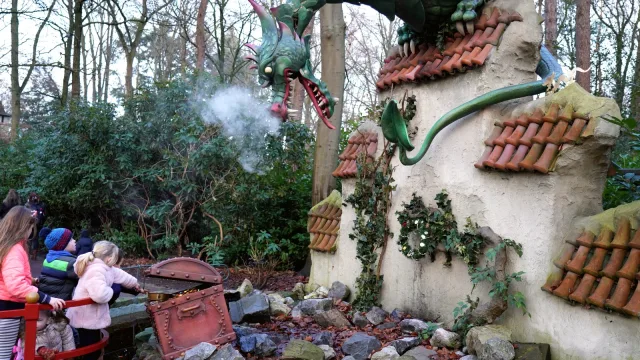
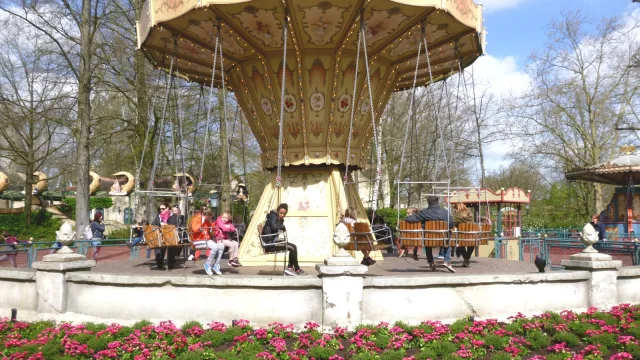
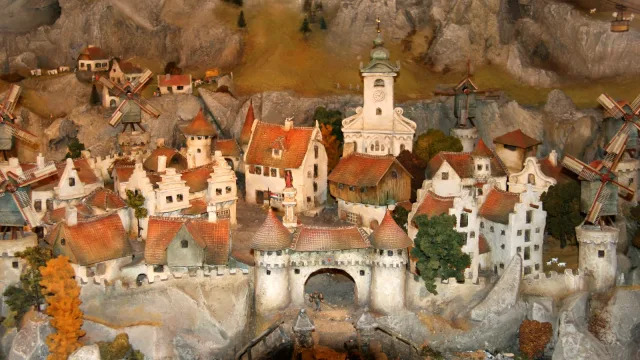
Within W8baan, Efteling is connected as manufacturer to attractions that primarily come from this internal creative tradition. The Fairytale Forest is the foundation: not a conventional ride, but a route through scenes in which architecture, figures, sound, movement and landscape together form an attraction. Anton Pieckplein builds on the same visual language with historic carousels, square design and craft-like details. Diorama, opened in 1971, shows how Efteling used scale models, miniature technology and moving trains to create a poetic world in small form. Volk van Laaf, opened in 1990, is a fully original fictional society, including walk-through, figures, buildings and monorail. The Efteling Museum then places that design tradition in a historical context.
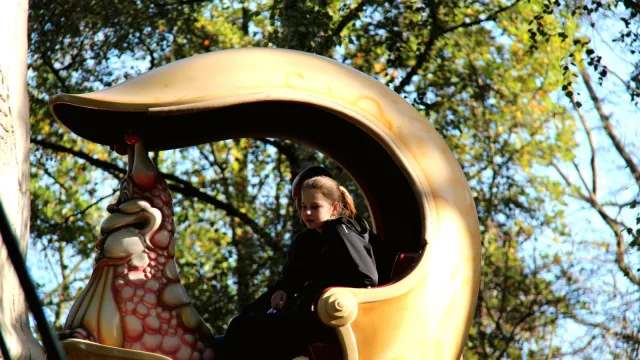
The internal design culture is not limited to walk-throughs. Attractions such as Fata Morgana, Droomvlucht, Villa Volta, Symbolica and Danse Macabre show that Efteling often takes the lead in story, art direction, show dramaturgy and guest experience, even when ride systems are supplied by external manufacturers. Efteling can therefore be understood as a park-based studio: the organization purchases technical systems where needed, but guards concept, thematic coherence and long-term identity itself.
This approach has made Efteling influential among European theme parks. The park has shown that regional culture, fairytales, craft detail and slowly built brand continuity can compete with IP-driven resort strategies. As a manufacturer profile, Efteling is therefore not about mass production, patents or export models, but about the internal creation of attractions that are maintained, expanded and reinterpreted over decades.
This internal role does not mean that Efteling produces every technical system itself. For decades the park has worked with specialized partners for roller coasters, transport systems, show mechanics, controls and construction. Its own contribution lies mainly in the coherence between environment and experience: the choice of story, the relationship with existing park areas, the visual style, the way guests approach a scene and the care with which objects are later preserved. In that sense Efteling acts as client, scenographer, heritage manager and creative manufacturer at the same time. The W8baan-linked attractions reflect exactly that domain: they depend less on external catalogue models and more on internal design continuity.
History
Efteling's public history begins in 1952, but its organizational foundation lies in 1950 with the establishment of Stichting Natuurpark de Efteling. The initiative fitted the post-war ambition to stimulate recreation, nature and local development in Kaatsheuvel. Mayor R.J.Th. van der Heijden was a driving force, while illustrator Anton Pieck and filmmaker-inventor Peter Reijnders gave the Fairytale Forest its character. Pieck drew houses, gates, figures and atmospheres; Reijnders devised practical techniques for movement, sound and illusion.
The Fairytale Forest opened on 31 May 1952 with ten fairytales. It did not become a temporary decorative route, but a growing environment that received new scenes, restorations and technical improvements in every decade. From the 1950s onward, Efteling also developed squares and attractions around the Pieck style, including Anton Pieckplein. Diorama followed in 1971, presenting a miniature world in an indoor space. The 1980s brought broader ambition with larger attractions such as Python, Carnaval Festival and Fata Morgana, turning the park into a full theme park.
Volk van Laaf opened in 1990 as one of Efteling's most distinctive original worlds. Droomvlucht in 1993 and Villa Volta in 1996 confirmed the role of the internal creative organization in European dark ride and show development. The Efteling Museum opened in 2004 as a place to preserve designs, models and objects. Later projects such as Symbolica in 2017 and Danse Macabre in 2024 show how Efteling continues to connect its heritage with modern ride and show technology.
An important historical pattern is that Efteling does not simply replace its older creations. The park restores, relocates, documents and updates elements while preserving the recognizable atmosphere. This applies to fairytale scenes, squares and museum objects, but also to former attractions whose drawings and figures return in the museum or in new projects. The park's own history therefore became a working resource for future development. Efteling's manufacturer role is closely connected to preservation: new attractions often arise in dialogue with existing icons, old designs and the expectations of generations of visitors.
Innovation and technology
Efteling's technical strength does not lie in a single mechanical ride platform, but in the integration of design, show technology, maintenance and guest dramaturgy. From the Fairytale Forest onward, technology was used to make scenes believable: moving figures, sound effects, lighting, water, perspective and hidden mechanics all had to serve the fairytale. The technology could create visible wonder, but it should not distract from the story.
In later projects, that approach developed into a multidisciplinary process. In walk-throughs such as Diorama, Volk van Laaf and the Fairytale Forest, the work involves miniature technology, figure construction, painting, landscape maintenance and visitor flow. In dark rides and shows, Efteling works with external ride suppliers, but internally specifies scenes, music, timing, scenic architecture, costumes, animatronics, special effects and maintainability. Symbolica, for example, combines a trackless ride system with a palace world directed by Efteling, while Danse Macabre brings show movement, music, scenery and ride dramaturgy together as one experience.
Conservation is also technically important. Many Efteling objects remain in use for decades and are restored without losing their original character. The technical background therefore includes not only new construction, but also reconstruction, material selection, climate, color research, mechanical replacement and guest safety in historic scenes.
The boundary between technology and maintenance is therefore thin. A moving fairytale figure, a miniature train or a Gothic show set must not only work on opening day, but continue to operate quietly, safely and appropriately within its scene year after year. Efteling therefore spends substantial technical effort on inspection, replacement parts, restoration of old mechanisms, adaptation to safety standards and management of visitor flows. The internal organization has to combine historical appearance with modern requirements for accessibility, reliability, capacity and fire safety. This combination explains why in-house attractions are relevant as a manufacturer profile.
Industry impact
Efteling has influenced the European attractions industry mainly by showing that a park with a local, non-American visual language can gain international appeal. The Fairytale Forest proved that slow pacing, craft-like scenes and familiar stories can form an attraction without conventional ride mechanics. That idea influenced the way European parks began to treat environments, squares and walk-throughs as attractions in their own right.
The combination of Anton Pieck's romantic visual language and Peter Reijnders' technical solutions became a recognizable alternative to purely mechanical thrills. Later, Fata Morgana, Droomvlucht and Villa Volta showed that Efteling could also create major show attractions in which music, story and architecture mattered more than records. Symbolica and Danse Macabre confirm that the park continues to combine internal creative direction with external ride systems.
The influence therefore lies not in exporting standard models, but in a design mentality: theme, landscape, route, memory and maintenance together form the attraction. For many European parks, Efteling became proof that continuity and originality can build a powerful brand.
Beyond the Netherlands, Efteling became a reference for parks that wanted not merely to buy attractions, but to develop their own world. Its influence is visible in discussions about European theming, landscape use and the value of original stories. Efteling showed that a park does not need to depend on film licenses to create emotional recognition. For designers, the longevity of the scenes is especially instructive: details must convince today, but also retain meaning after restorations and generations of visitors.
Current operations
Efteling operates as a theme park, resort, hotel and accommodation provider, and media company around its Kaatsheuvel location. The internal creative work is interwoven with park development, renovation, maintenance, merchandise, entertainment and marketing. New projects are usually realized with specialized ride suppliers, construction partners, show technicians and composers, but Efteling guards concept, story, design style and guest experience.
The organization also maintains a large heritage collection. The Fairytale Forest, Anton Pieckplein, Diorama, Volk van Laaf and the Efteling Museum require continuous restoration, technical inspection and scenographic care. Recent investments such as Symbolica, Danse Macabre, hotel development and seasonal events show that Efteling continues to expand its resort capacity without abandoning its historical core. In the manufacturer profile, current operations therefore mainly mean internal creation, renovation and management of its own themed attractions.
The company therefore works as a continuously developing studio. Design, technical, operations, maintenance and heritage teams need to coordinate because changes to a scene can immediately affect routing, safety, capacity and brand experience. The W8baan-linked attractions are good examples: they operate daily, but also carry park history. Current operations for Efteling therefore mean not only building new projects, but also carefully improving existing worlds without losing their recognizability.
Design philosophy
Efteling's design philosophy centers on believable wonder. An attraction does not always need to be fast or technically spectacular; it should feel as if it has long belonged to its world. Aging, material texture, proportion, landscape and music are therefore as important as mechanics. The Pieck style is not simply nostalgic decoration, but a method for bringing human scale, craft and gentle melancholy into public spaces.
At the same time, Efteling is not a museum standing still. New projects often seek a balance between recognizable park identity and modern technology. Symbolica uses contemporary ride technology for a fairytale palace; Danse Macabre replaces the Spookslot heritage with a new show ride that still builds on the same Gothic emotional world. The core philosophy is that technology, story and place must reinforce one another, so that an attraction becomes part of a larger park memory.
An Efteling design therefore often begins not with capacity or hardware, but with atmosphere. What emotion should a gate, bend, square or figure evoke? How does the space sound, how does it smell, how much time may the visitor take and where does the small moment of surprise occur? Only then is technology selected. This order explains why simple scenes can be as important as expensive rides: they strengthen the continuity of the world and make visitors experience the place as real.