Company profile
Dynamic Attractions is the attractions-focused name within a broader Canadian engineering lineage that reaches back to Vancouver Art Metal and later Dynamic Structures. That older organisation built complex steel structures, observatory enclosures, industrial installations and eventually heavy mechanical systems for theme parks. The dedicated attractions business was formed in 2011 to concentrate ride-system sales, development and integration. Dynamic then positioned itself not as a classic catalogue manufacturer, but as a partner for attractions in which mechanics, media, controls, show technology and building structure must be designed together.
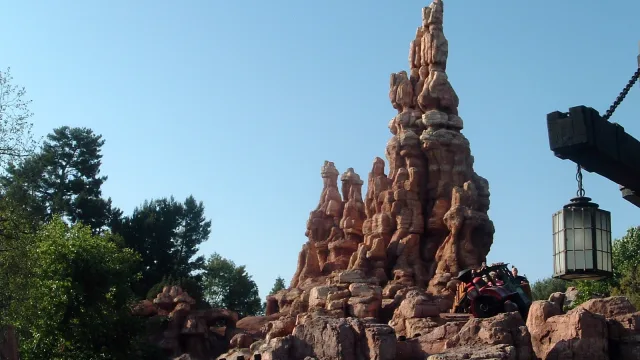
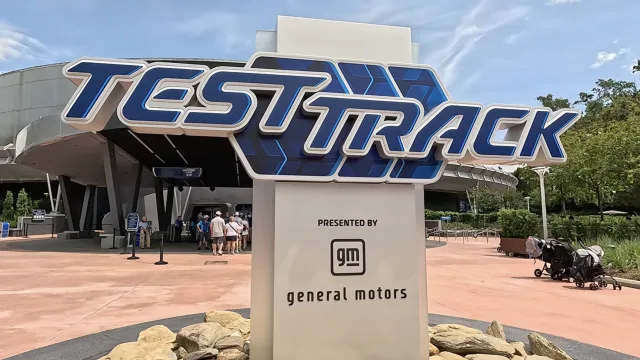
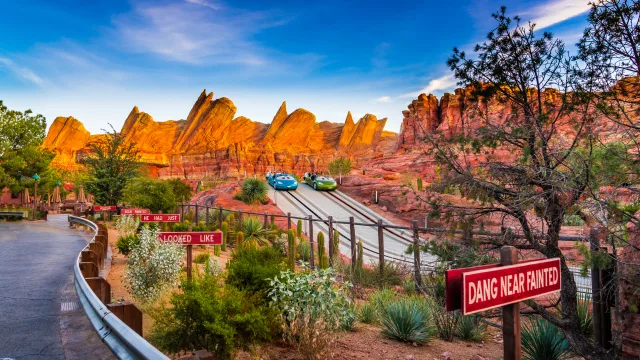
The connection with major park operators began before the formal creation of Dynamic Attractions. Dynamic Structures contributed to demanding Disney projects such as Soarin’ and Test Track, where heavy steel fabrication, motion control and safe mass throughput had to work as one system. Later, that expertise expanded into robotic-arm dark rides, flying theaters, motion theaters, slot-car technology and high-end custom rides. In W8baan, the name appears with Big Thunder Mountain Railroad, Test Track and Radiator Springs Racers. These links should mainly be read as ride-system and engineering involvement within large Disney ecosystems, often alongside Walt Disney Imagineering and other specialist suppliers.
The manufacturer became internationally known for systems that do not fit one traditional category. Soarin’ helped popularise the flying-theater genre. Harry Potter and the Forbidden Journey combined robotic-arm technology, busbar transport and media integration into a new generation of dark ride. Radiator Springs Racers and Test Track show the slot-car approach: vehicles move with high capacity through dark-ride and thrill sections while show, onboard control and speed are tightly coordinated. Mission Ferrari at Ferrari World Abu Dhabi became the best-known example of Dynamic’s SFX Coaster ambition, combining launches, show scenes and unusual track elements in one indoor concept.
The corporate story also involved major financial pressure. The group invested heavily in internal R&D and SFX coaster projects. In March 2023, Dynamic Technologies Group, together with Dynamic Attractions and related companies, sought protection under Canada’s Companies’ Creditors Arrangement Act. A court-approved transaction with Promising Expert Limited followed later that year. The current Dynamic Entertainment website presents the business as rejuvenated and active, emphasising ride systems, services, parts, co-ventures and attraction development. The profile is therefore that of an active but restructured specialist with an exceptional reputation in complex media-based attractions.
That position makes Dynamic unusual in a manufacturer profile. The company does not merely sell vehicles or track, but complete technical ecosystems in which a fault in one subsystem can immediately affect throughput, storytelling and safety. Testing, commissioning, redundancy and maintenance access are therefore as important as the spectacular motion itself. Dynamic’s projects show how modern headline attractions increasingly resemble integrated industrial installations with a theatrical skin.
History
Dynamic’s earliest roots go back to 1926, when Vancouver Art Metal began as a metalworking company. Through names such as Coast Steel, AGRA Coast and AMEC Dynamic Structures, the organisation developed into a specialist in large steel structures and precision engineering. It built observatory structures and other installations in which reliability, movement and heavy mechanics were central. That experience became unexpectedly valuable to the attractions industry when Disney and other operators needed systems capable of moving large numbers of guests safely through media-intensive environments.
In 2007, AMEC sold the Dynamic Structures business to Empire Industries. During the following years, the attractions business became more important through projects around Soarin’, Test Track, Space Mountain refurbishments and robotic ride systems. In 2011, Dynamic Attractions was formed as a sister company to serve theme park attraction sales and development more directly. Peter Schnabel, previously associated with Premier Rides, became a visible leader of the new organisation.
The 2010s brought rapid expansion. Dynamic developed concepts such as the SFX Coaster, worked on flying theaters and opened an Attraction Development Center in Orlando. At the same time, risk increased: prototype projects, delayed deliveries and high development costs placed heavy pressure on the group. In March 2023, Dynamic Technologies Group and related companies obtained CCAA protection. Later that year a transaction with Promising Expert Limited was approved, after which the business continued under the Dynamic Entertainment name with ride systems, service and attraction development.
An important historical constant is that Dynamic repeatedly worked near the edge of what was technically normal. The step from observatory enclosures to flying theaters may seem large, but both require precise motion of heavy structures, high reliability and engineering that cannot visibly fail. In the attractions market, that knowledge took a new form: guest volume, show timing, intellectual property requirements and operational availability became part of the same brief. The 2023 restructuring changed the corporate context, but not the value of the accumulated know-how.
Innovation and technology
Dynamic’s technical strength lies in systems integration. Its attractions often combine heavy steelwork, moving platforms, industrial controls, show control, projection, audio, vehicle tracking and safety logic. In a flying theater, dozens of seats must move in sync with a dome screen without compromising capacity, emergency procedures or comfort. In slot-car attractions such as Test Track and Radiator Springs Racers, vehicles must be individually controlled while combining dark-ride scenes, outdoor acceleration and show timing.
Robotic-arm dark rides add another layer: the arm, vehicle, transport track, projection screens and physical sets must work reliably on millisecond timing. Dynamic’s heritage in observatory and steel construction helped with these large, rigid and precisely moving structures. The SFX Coaster extended the same logic into roller coaster elements, launches, special track pieces and media environments. The technology is therefore less a single product than an architecture of mechatronics, software, steel and show integration.
In Dynamic projects, the vehicle architecture is often only one visible part of a larger technical chain. Behind it sit evacuation scenarios, PLC and show-control layers, media-server synchronisation, vehicle diagnostics and tolerances in steel structures. Flying theaters require smooth motion with low subjective strain; robotic-arm dark rides require extreme freedom of movement inside tightly defined scenes. Slot-car attractions demand accurate vehicle spacing, reliable onboard energy and fast transitions between indoor show and outdoor acceleration. SFX coasters add special track elements, launches, brake zones and show rooms. The technology is therefore modular, but each project still requires custom engineering because building, story and capacity differ.
Industry impact
Dynamic Attractions mainly influenced the boundary between thrill ride and dark ride. The company showed that a ride system is not merely transportation, but can define pacing, camera language and dramatic structure. Soarin’ turned the flying theater into a format that operators worldwide could understand. Test Track and Radiator Springs Racers proved that slot-car technology can combine dark-ride capacity with coaster-like speed. Harry Potter and the Forbidden Journey became a reference point for robotic-arm dark rides in which vehicles, projection and physical sets form one continuous experience.
The impact also lies in the ambition of prototype development. The SFX Coaster was risky and financially heavy, but brought lateral track movement, launches and show rooms closer together. Even when projects were delayed, they influenced the vocabulary with which parks discuss “next generation” media-based rides. Dynamic therefore helped raise expectations for integration, commissioning and technical storytelling.
For the industry, this meant ride manufacturers moved closer to film studios, software teams, AV integrators and structural engineers. A Dynamic project often requires early collaboration between creative director, structural engineer, controls specialist, media producer and park operations. That model is now normal on major dark rides, but Dynamic was among the suppliers that made it visible. The company also showed that service and lifecycle support are essential: when technology is this integrated, the manufacturer remains relevant long after opening day.
Current operations
After restructuring, Dynamic operates under the broader Dynamic Entertainment identity. The public website presents the company as active in ride systems, services, parts, co-venture attractions and turnkey attraction development. At the same time, the legal history of 2023 remains important: the group sought CCAA protection, obtained a court-approved transaction with Promising Expert Limited and the monitor was discharged in 2025. The current profile should therefore not be read as an unchanged pre-2023 manufacturer.
The operational focus is on service, specialist parts, existing ride-system knowledge and new attraction-development opportunities. For parks, Dynamic remains relevant when a project combines heavy engineering, media integration, motion platforms or robotic systems. The legacy installations at Disney, Universal, Ferrari World, Futuroscope and other destinations continue to carry the company’s reputation.
Parts and service are therefore more than a side activity. Many major media-based attractions are unique, meaning standard components are not always available. Dynamic consequently presents itself as a company that can source rare parts, rejuvenate aging systems and help operators keep existing installations reliable for longer. That role fits a market in which replacement is often more expensive and riskier than controlled modernisation.
Design philosophy
Dynamic’s design philosophy is about making heavy technology disappear. A guest sees a flight, car race, magical journey or film scene; behind it, steel structures, actuators, industrial controls and show software work as one machine. The company therefore designs from experience engineering: ride sensation, media, capacity and maintainability have to be considered together from the start.
That philosophy explains why Dynamic often appears on mission-critical projects for major operators. The manufacturer is not only looking for new motions, but for systems that can deliver high availability for years. Innovation has two sides here: spectacle and risk. The SFX Coaster shows how far Dynamic wanted to push technical adventure, while the later restructuring shows how financially heavy such prototypes can become.
Dynamic is therefore at its best when an attraction has no clear boundary between machine and story. The technology must be powerful enough to enable extraordinary motion, but discreet enough not to break the narrative. In practical terms, that means close attention to maintenance access, calibration, sensors, software updates and training for park teams. The designer thinks not only toward opening day, but toward years of daily operation.