Company profile
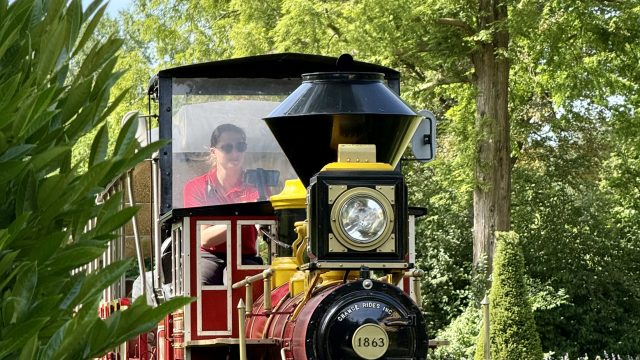
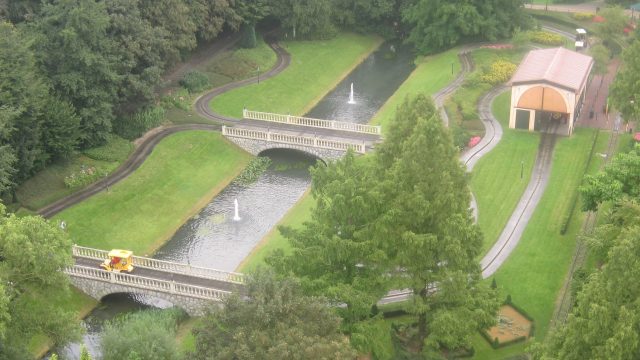
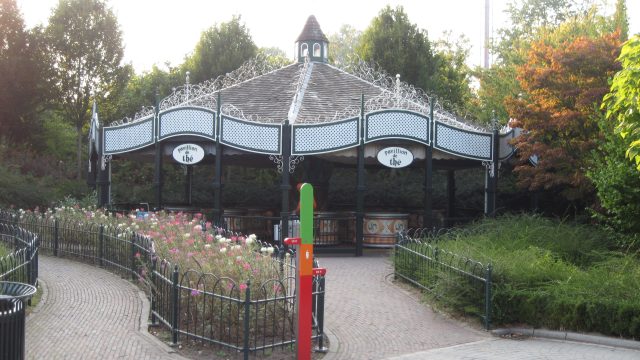
Chance Rides, LLC is one of the recognisable American manufacturers at the intersection of amusement rides, midway engineering, park transport and family entertainment. The company is based in Wichita, Kansas, and traces its origin to Chance Manufacturing Company, Inc., founded in 1961 by Richard H. Harold Chance. Its first defining product identity was the C.P. Huntington park train, a compact replica-style train for parks, zoos and leisure destinations. Chance states that more than 430 C.P. Huntington trains have been produced, while the company has manufactured, delivered and installed more than 3,000 rides and people movers in total. This makes Chance more than a roller coaster builder: it is a broad infrastructure supplier for destinations where guest flow, dwell time, nostalgia and ride experience meet. The portfolio ranges from carousels, trams, trains and wheels to thrill rides such as the Zipper, Trabant, Skydiver, Pharaohs Fury, Freestyle and Revolution. The acquisition of Allan Herschell assets in 1970 brought carousel tradition and additional family rides into the business. Expansion into roller coasters became more significant after Michael Chance acquired the designs of D.H. Morgan Manufacturing in 2001 and formed Chance Morgan Coasters. That move gave Chance access to modern coaster engineering and responsibility for servicing the Morgan legacy. The Hyper GT-X, with Lightning Run at Kentucky Kingdom as its best-known example, shows how Chance could position compact thrill coasters alongside its older park ride and people mover identity. Within W8baan, Chance is linked to six active attractions, including Walibi Express Station 1 and Le Tour Des Jardins at Walibi Holland, Dragon Swing and Flying Ace at Knott’s Berry Farm, Pavillon de thé at Walibi Holland and Grand Caravan Carousel at Busch Gardens Tampa. That spread illustrates the company’s breadth: transport, family rides, swinging ships, carousels and park classics rather than one specialised coaster type. After the 2023 sale or financial partnership with Permanent Equity, Chance remained active in Wichita under the Chance Rides, LLC name. Its current direction emphasises service, electric people movers, international partnerships and sustainable modernisation of existing fleet products. That breadth is what makes Chance important in an attraction encyclopedia. Many guests experience a Chance attraction as a park classic or an internal transport system rather than as a high-profile headline ride. For operators, however, these are core assets: they spread families through the park, provide capacity for younger or mixed audiences and reinforce the identity of an area. Chance products may therefore be less spectacular in marketing language, but they are highly visible in everyday park operations.
History
The history of Chance Rides begins before its formal incorporation, with Harold Chance’s experience building miniature trains for the Ottaway Amusement Company in Wichita. That background explains why the first defining Chance product was not a roller coaster, but the C.P. Huntington park train. In 1961 Harold Chance founded Chance Manufacturing Company, Inc. in Wichita. The company grew quickly by building practical, transportable and robust attractions for parks and midway operators. In the 1960s, products such as Trabant, Skydiver and Zipper appeared, giving Chance a reputation for strong mechanical concepts that could work in both portable and permanent settings. In 1970 Chance purchased the assets of Allan Herschell Company, then one of the major North American amusement ride manufacturers. This brought carousels and additional family rides into the portfolio. Harold Chance also organised an early safety seminar in 1971 that the company history links to the later AIMS tradition. The 1970s and early 1980s were a period of product creativity, including the Yo-Yo. In 1985 Harold Chance retired and Dick Chance formed a broader company structure with Chance Rides, Chance Coach and Chance Engineering. Chance records further growth in 1989 with carousels and urban transit products. The move toward modern coaster activity came in 1998 and 2001. Michael Chance joined the business, expanded the theme park side and acquired the designs of D.H. Morgan Manufacturing in 2001. Production moved to Wichita, while engineering remained in California for a time. In 2004 Chance American Wheels worked with European partners on R60 observation wheels. In 2011 the Chance Rides name was reintroduced as the central brand. John Chance led the electrification of the C.P. Huntington from 2016, Aaron Landrum joined in 2017, and after Dick Chance’s retirement and the Permanent Equity partnership in 2023, Landrum became President and CEO. In 2025 and 2026, the emphasis shifted further toward electric mobility, international partnerships and continuation of the Wichita manufacturing legacy.
Innovation and technology
The technical identity of Chance Rides is broad and practical. The company does not build one single technology, but a family of mechanical systems that share demanding operational requirements: high availability, robust construction, maintainability, transportability where needed and a clear ride experience for a wide audience. In classic portable rides, this meant designs that could be erected quickly, operated reliably and withstand the stress of repeated movement. In park rides and carousels, the emphasis is on service life, themed finish, repeatability and support. The C.P. Huntington train shows another technical line: people movers must be enjoyable, but also predictable, accessible and suitable for daily operation in zoos, amusement parks and leisure areas. The recent move to electric C.P. Huntington trains and eTRAM products shows Chance modernising existing transport knowledge with quieter, cleaner and more serviceable drives. Factory information describes engineering, prototyping, fabrication, moulding, painting and final assembly as integrated disciplines. For coasters, the D.H. Morgan integration added experience with steel track structures, custom layouts and more intensive dynamic calculation. The Hyper GT-X is positioned as a compact high-thrill coaster with strong banking, airtime elements and a layout that can be adapted to terrain and guest demographics. Technical support remains a major part of the lifecycle: service manuals, service bulletins, parts and customer training matter because many Chance products continue operating for decades. A recurring technical theme is modularity. Many Chance products must be adaptable to park versions, portable versions, local theming, capacity needs and existing fleet parts. That requires designs in which base mechanics, electrical systems, braking, controls, vehicles, scenery and maintenance points remain clearly organised. In carousels, craft finish is added to the equation, while wheels and coasters place greater weight on structural fatigue, wind loading and dynamic forces.
Industry impact
The influence of Chance Rides lies mainly in the combination of broad applicability and industrial continuity. The C.P. Huntington train became a recognisable standard for park and zoo transport because it linked themed nostalgia with practical daily operation. The Zipper, Trabant, Skydiver and Yo-Yo belong to a generation of American mechanical rides that helped define midways and regional parks. By acquiring Allan Herschell assets, Chance helped continue the North American carousel tradition in modern fiberglass and park versions. Through the D.H. Morgan line, part of the American steel coaster heritage also remained supported in operation. The role in AIMS and the emphasis on service manuals and bulletins show that Chance did not only deliver products, but also contributed to professionalisation around maintenance and safety. For W8baan, that impact is visible in the variety: Chance does not appear as one iconic coaster builder, but as a supplier of transport, family rides, carousels and classics that keep returning across different parks. That influence is also geographically important. Chance is deeply rooted in the American industry, yet its products operate in parks, zoos and leisure destinations outside the United States as well. The company represents a type of manufacturer that is not dependent on one record-breaking innovation, but on long operational life across many sites. The move toward electric trains and trams also shows how historic ride builders respond to modern demands around emissions, noise and maintenance costs.
Current operations
Chance Rides operates from Wichita, Kansas, with a sales and marketing address at 4200 W. Walker St. and a Wichita mailing address. Official sources describe an integrated factory covering engineering, prototyping, fabrication, moulding, painting, carousel art, final assembly and customer care. Since the 2023 partnership with Permanent Equity, the company has continued under the Chance Rides, LLC name, with Aaron Landrum as President and CEO. Current operations include new rides, electric people movers, service for existing C.P. Huntington fleets, parts and support for former D.H. Morgan products. In 2026, a partnership with Reverchon was also announced for production of the Spinning Coaster Stall Turn in Wichita for the American market. The strategy therefore has two tracks: supporting established park classics while electric mobility and partnerships broaden the future portfolio. For existing customers, the aftermarket is especially important. Chance continues to provide service and support for older C.P. Huntington trains, former D.H. Morgan rides and broad park ride families. This keeps the brand operationally present even when a park is not buying a new Chance attraction.
Design philosophy
The design philosophy of Chance Rides can be summarised as practical motion built for long life. The company creates attractions that operators can understand, maintain and use for many years, while guests immediately understand what the ride promises. In the C.P. Huntington, that means nostalgic recognisability and reliable transport; in carousels, crafted appearance and repeat appeal; in portable rides, intensity, visibility and quick setup; in coasters, custom thrill within a manageable footprint. Chance repeatedly seems to seek the point where show value and operator practicality reinforce each other. The electrification of people movers fits the same philosophy: existing product logic is not discarded, but adapted to lower emissions, less noise and long-term serviceability. As a result, many Chance products feel classic without becoming static. The guest experience is usually immediately legible. A train invites a scenic circuit, a carousel offers nostalgic repetition, a wheel promises views and a Zipper presents visible mechanical spectacle. Chance therefore often designs around recognisable archetypes, while making those archetypes industrially repeatable and maintainable.