Profile
About Alterface
Alterface is linked as manufacturer to 2 active attractions across 2 parks on W8baan.
You can temporarily save favorites in cookies. Create a free account or log in to use them on every device.
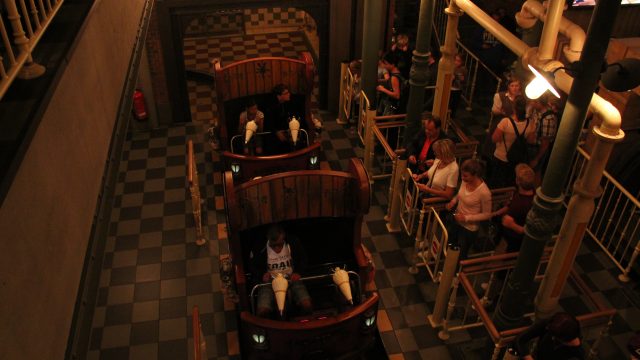
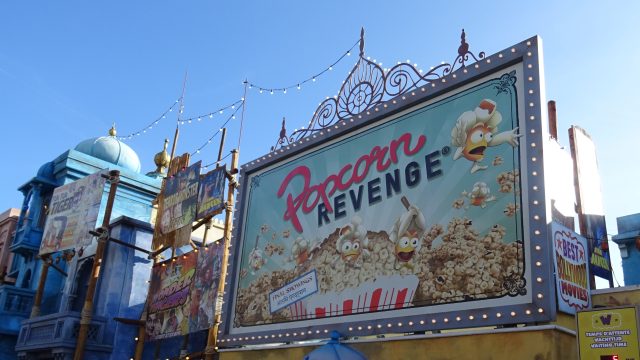
Alterface is a Belgian specialist in interactive dark rides, media-based attractions, shooting systems and show control. Founded in 2001 as a spin-off around interactive technology from Louvain-la-Neuve, the company is headquartered in Wavre. Alterface is best known for Maus au Chocolat at Phantasialand, Popcorn Revenge at Walibi Belgium, Sesame Street: Street Mission at PortAventura World, Bazyliszek at Legendia and interactive systems for LEGO Discovery Centres, Lost Island Themepark and other international parks.
Alterface is linked as manufacturer to 2 active attractions across 2 parks on W8baan.
Share of measured operating time in which the rides were open. Outages and maintenance count as downtime; closed and unknown do not count.
15.5 h measured operating time
40 h measured operating time
40 h measured operating time
Alterface is one of the manufacturers that helped shape the modern interactive dark ride. The Belgian company was founded in 2001 by Benoit Cornet and grew from interactive technology into a supplier for theme parks, museums, family entertainment centres and leisure venues. Unlike traditional ride manufacturers, Alterface often does not provide the full vehicle or track system. Its core contribution is the layer that makes a ride interactive: detection, pointing systems, scoring, real-time game logic, show control, media integration, devices, installation, fine-tuning and, in some cases, a complete creative turnkey concept. This means the company frequently works alongside ride system suppliers, scenic builders, media studios and park teams. Its best-known European projects show that role clearly. Maus au Chocolat at Phantasialand, opened in 2011, demonstrated that an interactive dark ride could be more than screens and points; it could be a richly themed world with 3D animation, physical sets and a distinct rhythm of play. Popcorn Revenge at Walibi Belgium went further with a non-linear Erratic Ride concept, ETF Ride Systems trackless vehicles and Alterface’s own Popcorn Revenge IP. Sesame Street: Street Mission at PortAventura World, Bazyliszek at Legendia and many LEGO Discovery Centre attractions show how Alterface adapts systems to established brands, educational goals and family audiences. The company developed product lines including Salto show control, Interactive Theatre, Interactive Dark Ride, Erratic Ride, Action League, Wander and MovieMax. Official communication presents a process that can run from initial pitch and story development through technical design, production, installation, show programming and fine-tuning. That combination of technology and storytelling makes Alterface relevant for parks seeking compact indoor attractions with measurable replay value. Since 2020 Alterface has worked under a renewed management structure led by CEO Stéphane Battaille, after founder Benoit Cornet moved in a new direction. The company remains active from Wavre, with international contact points, and continues to develop interactive formulas for dark rides, walkthroughs, theatres and hybrid experiences. A key characteristic is that Alterface supplies both generic technology and project-specific creativity. The same foundation of tracking, targets and scoring can serve a chocolate factory full of mice, a cinema invaded by rebellious popcorn, a Sesame Street mission or a Polish legend. For operators, the investment is therefore not only hardware, but a playable format that supports marketing, repeat visits and operational reporting. Interaction can also be tuned to age group, language, IP rules and capacity. This makes Alterface attractive to major parks seeking a high-quality dark ride, but also to smaller indoor venues that need a compact system with clear guest feedback and manageable technical complexity.
Alterface emerged in 2001 around Louvain-la-Neuve as a spin-off focused on interactive systems. Founder Benoit Cornet recognised that digital interaction was not only useful for computer games, but also for public attractions in which visitors could watch, aim, react and score together. The early years centred on interactive theatres and shooting systems. Step by step the company built knowledge in real-time detection, show control and audience behaviour. An important breakthrough came with Desperados-style interactive theatre concepts and the further development of Salto, a software and control system linking media, scoring, effects and ride management. In 2011 Maus au Chocolat opened at Phantasialand. It became a milestone because it combined a high-quality European dark ride with interactive 3D shooting and physical sets. International projects followed with well-known brands and partners, including Bazyliszek in Poland, Sesame Street: Street Mission in Spain, Popcorn Revenge in Belgium and interactive systems for LEGO Discovery Centres. Popcorn Revenge in 2019 was especially important because Alterface supplied not only technology, but also an original IP and a non-linear Erratic Ride format with trackless vehicles. In 2020 Benoit Cornet stepped away from the board role and Stéphane Battaille became the central executive leader. That transition marked a phase in which Alterface structured its product families more clearly, including Action League, Wander, MovieMax and new pointing technology. In the following years the company continued to announce projects in Europe, Asia and North America. Alterface’s history is therefore a movement from university-linked interactivity to a specialised supplier for the global attractions industry. The sequence of projects also shows a shift in ambition. Early systems mainly proved that groups could play interactively at the same time, while later Alterface developed complete ride dramaturgy, original game worlds and technical monitoring. The company therefore became more than a supplier of shooting equipment; it became a partner in the overall design of interactive family attractions. This positioning explains why sources often mention Alterface alongside vehicle suppliers and scenic designers.
Alterface technology is built around reliably translating guest action into show reaction. To do that, the company combines detection systems, infrared or camera-like tracking, pointing devices, real-time scoring, media playback, network architecture, effect control and ride management. Salto is an important control platform because it links vehicles, screens, targets, sound, lighting, physical effects and scoring so that interaction remains synchronised with ride movement. In Maus au Chocolat, Alterface applied a highly precise 4D shooting experience in which guests use pastry-bag devices to aim at animated mice. In Popcorn Revenge the same logic had to follow a much more complex non-linear path, because trackless vehicles can visit different scenes in changing sequences. Alterface therefore works not only on hardware, but also on gameplay, scene logic, monitoring and fallback behaviour. If a target, vehicle position or media server does not respond perfectly, the guest experience must not collapse. Later product lines such as Wander, Action League and MovieMax show a broadening toward walkthroughs, compact interactive theatres and tournament-style group competition. The technical core remains constant: guests should act intuitively and receive immediate meaningful feedback, while the operator keeps stable capacity and maintainable systems. A second technical characteristic is scalability. A system has to work in a large dark ride with dozens of screens, but also in a theatre or walkthrough where guests move more freely. That requires modular software, precise calibration and operator interfaces that can be understood by park staff. Alterface must also account for high throughput, children’s hands, different languages and the need to display scores clearly without interrupting the story. In modern installations, data becomes increasingly important: faults, hit rates, scene performance and vehicle positions can support maintenance and operational optimisation. The strongest Alterface systems therefore disappear behind the experience while giving the operator a high degree of control.
Alterface’s impact lies in moving dark rides from passive viewing experiences toward playable attractions. That idea was not entirely new, but Alterface made the technology scalable, repeatable and suitable for many kinds of parks. With Maus au Chocolat, the company showed that top-tier European dark rides could combine interactive gameplay with scenic design, humour and high production quality. With Popcorn Revenge, Alterface proved that original IP, trackless routing and non-linear scene order could work together with competitive scoring. Awards for Popcorn Revenge, Bazyliszek and Sesame Street: Street Mission strengthened that reputation. The impact is also visible at smaller venues: interactive theatres, LEGO Discovery Centre projects and compact formulas give operators a more affordable alternative to large dark rides. Alterface also changed the role of the technology partner. The company does not merely supply equipment, but contributes to game rules, story, layout, capacity and maintenance thinking. As a result, interactivity became a strategic element of family attractions rather than an optional gimmick. This also had a commercial effect. Interactive dark rides give parks an attraction suitable for broad family audiences, less dependent on weather and able to encourage repeat rides through scores or teams. For European parks this mattered because indoor space is often limited and large dark rides are expensive. Alterface offered a way to deploy technology modularly, from premium projects to compact formats. Recognition by TEA, Park World and European Star Awards gave other operators confidence that interactive media attractions are not just temporary spectacle, but durable guest offerings.
Alterface operates from Wavre, Belgium, with official contact points for Europe, Asia and the United States. The company presents itself as a supplier of interactive technology and turnkey solutions for dark rides, theatres, walkthroughs and hybrid media attractions. Official pages show recent products and projects such as Wander, Action League, MovieMax, Erratic Ride and new pointing technology. Its process runs from concept and pitch through technical design, production, installation, show programming and fine-tuning. The current market position is that of a specialised technology partner working with ride vehicle suppliers, IP owners, parks and design studios. Alterface remains visible at industry events and in trade publications because interactive attractions appeal to operators seeking indoor capacity, replay value and data-driven competition without always building a large roller coaster or outdoor ride. The company therefore appears to operate between two markets: custom work for major theme parks and productised formats for smaller venues. Recent communication around Action League, Wander and MovieMax points to formats that can be repeated more quickly than a fully unique dark ride. At the same time, Alterface remains project-driven when a park wants to combine its own story, IP or vehicle partner with interactive gameplay.
Alterface’s design philosophy is built around invisible technology. Guests should not think about sensors, servers or calibration, but about story, opponent, score and shared action. The company therefore tries to make gameplay understandable from the first second: aiming, reacting and scoring must feel natural. At the same time, the technology has to be flexible enough for parks with different budgets, IPs and spatial constraints. Alterface often searches for a balance between competitive play and family fun. A ride may challenge visitors, but it should not only serve experienced gamers. Projects such as Maus au Chocolat and Popcorn Revenge show that interaction works only when scenic design, media, vehicles, sound and timing come together. The philosophy is not technology for its own sake, but technology as a dramaturgical tool that adds rhythm, humour and replay value. That philosophy also requires discipline. Too many targets or too much visual stimulation can make a ride chaotic, while too little feedback makes interaction meaningless. Alterface therefore seeks clear rules, readable scenes and a pace that works for children and international visitors. The strongest designs let everyone participate without sacrificing the narrative layer.
Alterface is founded by Benoit Cornet as a Belgian spin-off focused on interactive systems.
Challenge of Tutankhamon at Walibi Belgium becomes associated with Alterface interactive shooting technology.
Phantasialand opens Maus au Chocolat, a major European interactive dark ride using Alterface technology.
Park World profiles Alterface as the company reflects on ten years of interactive attractions.
Bazyliszek at Legendia strengthens Alterface’s reputation in award-winning interactive dark rides.
Walibi Belgium opens Popcorn Revenge, using Alterface original IP and Erratic Ride interactivity.
PortAventura World opens an award-recognised family dark ride with Alterface interactive systems.
Founder Benoit Cornet steps away from the board role and Stéphane Battaille leads the renewed management team.
Alterface promotes Action League as a compact interactive tournament attraction concept.
Alterface announces multiple openings including Volkanu, Harrington Flint’s Island Adventures and Imagination Express.
Alterface continues presenting compact media-based and interactive attraction formats for different venue sizes.
Alterface announces new pointing interaction work for Phantom Theater: Opening Nightmare at Kings Island.
Phantasialand · 2011
Walibi Belgium · 2019
PortAventura World · 2019
Legendia · 2018
Walibi Belgium · 2003
Walibi Belgium
Warner Bros. Movie World · 2012
Warner Bros. World Abu Dhabi · 2018
Qingdao Oriental Movie Metropolis · 2018
Lost Island Themepark · 2022
Fantasy Island · 2022
LEGO Discovery Centre Brussels · 2022
LEGOLAND Discovery Centres
Kings Island · 2026
Netflix House Dallas · 2025
2021
2 linked attractions