Company profile
Von Roll Seilbahnen AG represents a distinctive kind of manufacturer in attraction history: a heavy Swiss industrial group that translated ropeway technology into amusement parks, world’s fairs, zoos and recreation areas. The wider Von Roll group traces its roots to nineteenth-century iron and steel production in the Canton of Solothurn. Current official sources refer to origins in 1803 and a formal Von Roll foundation in 1823. From that industrial background, the company developed expertise in steel, mechanics, transport and later electrical insulation. Its attraction activity was therefore not an isolated amusement business, but an application of alpine and urban transport engineering in a leisure setting.
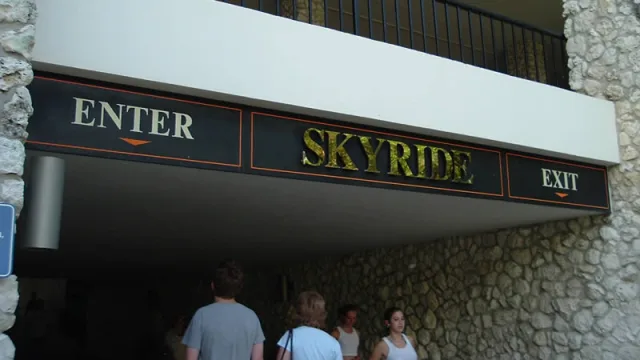
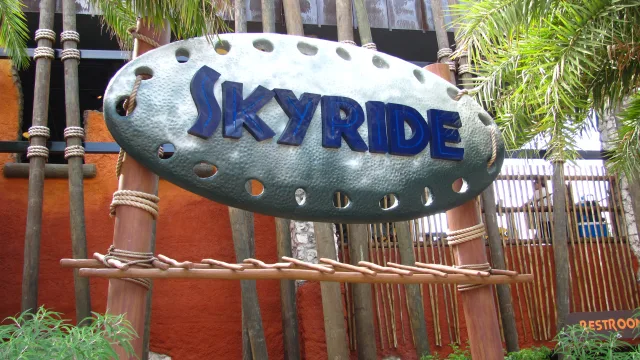
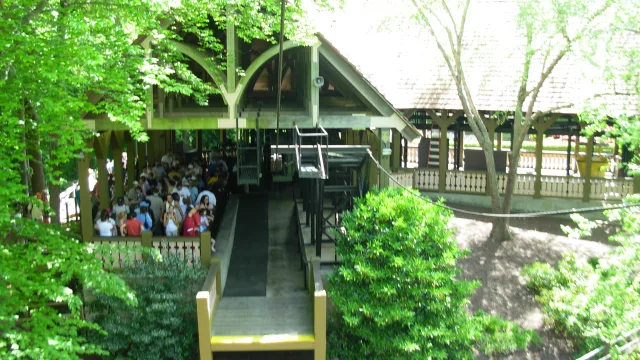
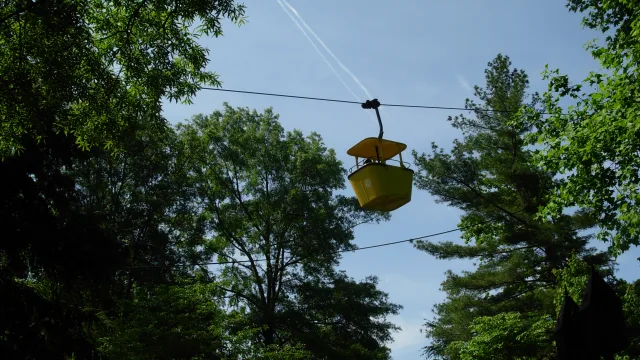
The best-known contribution to amusement parks was the VR101, often called simply the Sky Ride or Von Roll Type 101. This was a compact aerial ropeway with small gondolas or chairs that moved guests high above a park. The system suited operators that wanted to combine views, circulation and a calm family attraction. Disneyland opened a Von Roll Skyway in 1956, after which similar systems appeared in American parks, zoos and event grounds. Cedar Point, Busch Gardens Tampa, Busch Gardens Williamsburg, SeaWorld San Diego, San Diego Zoo, Minnesota State Fair, Six Flags Great Adventure and California’s Great America are among the best-known examples.
Technically, the installations were close to mountain cableway logic. They offered continuous movement, relatively high capacity, limited ground footprint and dramatic sightlines without the forces of a thrill ride. In parks, they often functioned as both transportation and attraction: guests could connect areas, view animal habitats or experience a panorama of coasters and landscapes. That explains why some systems remained in service for decades despite changing safety expectations, parts management, weather limits and maintenance costs.
The ropeway division gradually lost ground during the 1980s and 1990s. Many park skyrides disappeared because of aging infrastructure, spare parts, wind restrictions, liability concerns and changing park planning. In 1996, the cableway and ropeway business was sold to Doppelmayr/Garaventa, which continued to develop the technology. Today, Von Roll’s activities focus on electrical insulation, composites and industrial materials within ELANTAS/ALTANA. For attraction encyclopedias, however, Von Roll remains important as the manufacturer that defined the image of the classic park skyride. This dual identity makes Von Roll interesting in a manufacturer database. The name refers both to a continuing industrial company and to a discontinued attraction branch. That distinction matters when evaluating projects: a Busch Gardens Skyride or Disneyland Skyway is historically Von Roll, but the present Von Roll does not sell new park ropeways. The legacy survives mainly in installations, documentation, parts knowledge and successor Doppelmayr/Garaventa technology. Von Roll therefore illustrates how infrastructure engineering temporarily became part of the amusement industry and then largely returned to transport and mobility.
History
Von Roll emerged from the Swiss iron industry. The wider company history begins with industrial activity from 1803 and is often summarized in official transaction documents with 1823, when Ludwig Freiherr von Roll founded the Gesellschaft der Ludwig von Roll’schen Eisenwerke. The company grew into one of Switzerland’s major industrial groups, active in iron, steel, machinery, transport and later electrical insulation. That broad base made the development of cableway systems possible.
The ropeway branch became important in the twentieth century. Von Roll built mountain lifts, funiculars, urban cableways and systems for leisure applications. The VR101 line became a recognizable park product in the postwar era. The Disneyland Skyway of 1956 gave the system international visibility: a Swiss ropeway became a modern American park icon. During the 1960s and 1970s, installations followed at world’s fairs, Cedar Point, SeaWorld, Busch Gardens, Six Flags parks and zoos.
The peak years coincided with a period in which parks valued calm panoramic attractions. A skyride offered transport, capacity and spectacle without major ride forces. From the late 1980s, the market changed. Parks invested more in coasters, dark rides and IP areas, while older ropeways became more expensive to maintain. Safety, wind sensitivity and spare parts became more important factors.
In 1996, Von Roll sold its aerial tramway and cableway division to Doppelmayr/Garaventa. The remaining Von Roll group refocused on industrial materials and electrical insulation. In 2023, ELANTAS, part of ALTANA, acquired a majority stake in Von Roll; in 2024, Von Roll was fully taken over and delisted from the SIX Swiss Exchange. Von Roll’s attraction history is therefore not a straight line of park projects, but a branch of a much larger industrial concern. That context explains both the high technical standard of the systems and why the park market did not remain the company’s core. The skyride was successful as a showcase, but too specialized to define the broader business model.
Innovation and technology
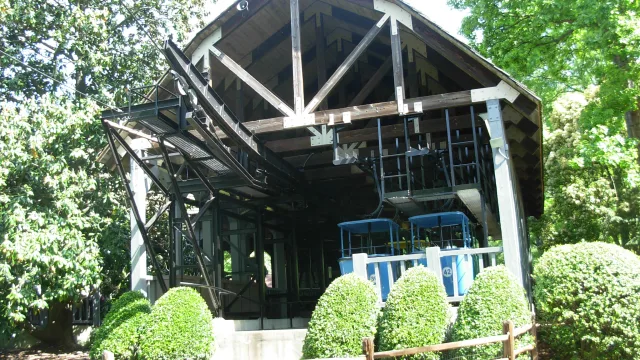
Von Roll’s technical core was cable transport. The VR101 used the principles of a detachable monocable ropeway: vehicles could attach to the cable, move continuously through stations and cover a long route with a relatively small ground footprint. For parks, that was attractive because towers and stations took up less space than an equivalent rail or road connection. The attraction could also pass above paths, buildings, animal habitats and roller coasters.
In park applications, the technology was deliberately lighter and more guest-friendly than many mountain lifts. Small gondolas or chairs, low boarding speeds, visible station mechanics and clear routes made the system understandable to visitors. At the same time, it remained dependent on professional cableway principles: cable tension, grip technology, braking, evacuation procedures, wind limits and periodic inspections shaped operation.
Von Roll also supplied broader ropeway technology. The company worked on aerial tramways, funiculars and monorails and delivered engineering knowledge that was later developed further within Doppelmayr/Garaventa. Patent material from the Von Roll Transportsysteme period shows attention to safety and rescue systems for cableways. Early 3S technology, later refined by Doppelmayr, also belongs to this transfer of Swiss ropeway engineering.
For amusement parks, the key technical innovation was not speed, but continuous transportation with a panoramic experience. The Sky Ride made height accessible to families and gave operators a transport attraction with its own ride value. A skyride also required a different safety philosophy from many mechanical attractions. Failures had not only to be stopped, but also managed at height. Evacuation, rescue cars, communication, weather monitoring and inspection cycles were therefore part of the design mindset. That infrastructure mentality distinguished Von Roll from many traditional amusement ride builders.
Industry impact
Von Roll strongly influenced the image of the classic park skyride. In the 1950s, 1960s and 1970s, an aerial cableway represented modernity, views and calm mobility inside a park. The Disneyland Skyway gave the system an almost iconic status, after which other parks adopted the combination of transportation and attraction. For many visitors, a Von Roll ride was their first experience of cable transport.
The effect was international. The VR101 and related systems appeared at world’s fairs, fairgrounds, zoos, regional parks and major resort parks. They helped parks add height and panorama without building an aggressive thrill ride. In zoos and safari-style parks, the system also made it possible to view animal areas without adding ground traffic.
The later disappearance of many systems is also instructive. Von Roll skyrides show how attractions can age through changing standards, parts availability, weather sensitivity and liability, even when guests continue to love them. The installations still operating at Cedar Point, Busch Gardens, SeaWorld, San Diego Zoo or fairs are therefore technical heritage. They recall a period when transport engineering, panorama and family ride could be one product. That legacy remains relevant for contemporary designers. Modern parks again look for gentle mobility, viewpoints and links between zones. The classic Von Roll skyride shows that such systems can be attractions in their own right when route, view and reliability are designed together.
Current operations
Von Roll no longer operates as a manufacturer of amusement park skyrides or ropeway attractions. The cableway and aerial tramway division was sold to Doppelmayr/Garaventa in 1996. The current Von Roll business focuses on electrical insulation, composites and industrial materials. Since 2024, Von Roll has been wholly owned by ELANTAS, a subsidiary of ALTANA, and its shares have been delisted from the Swiss exchange.
For existing attractions, this means support no longer comes from an independent Von Roll attraction division. Operators manage installations through their own technical teams, specialist cableway companies, modernisation projects and inspection regimes. Some systems received new controls or components from successor suppliers, while others were closed or removed.
The Von Roll name remains associated in the attractions sector mainly with heritage installations. Parks such as Busch Gardens, Cedar Point, SeaWorld San Diego and San Diego Zoo still operate or document systems rooted in Swiss ropeway engineering. Current business activity and historical attraction legacy therefore clearly diverge.
Design philosophy
Von Roll’s design philosophy came from transport engineering. A Sky Ride had to move guests reliably while also offering a relaxing, memorable park experience. The route was therefore as important as the station: towers, cable alignment and sightlines shaped how guests read the park from the air. A good Von Roll installation made the landscape understandable and attractive.
The systems were not thrill rides in the classic sense. Their strength lay in calmness, height, repetition and trust. Small vehicles, continuous movement and recognizable stations gave visitors the feeling of floating above the park without intense forces or complex instructions. For families, that was an accessible form of adventure.
Operationally, Von Roll thought in terms of infrastructure. Installations had to function for years, move large numbers of people and remain safe under clear weather and inspection rules. In parks, that produced a restrained but elegant design approach: technology visible enough to inspire confidence, yet discreet enough to keep the view and ride experience at the centre.