
Profile
About Schwarzkopf Industries GmbH
Schwarzkopf Industries GmbH is linked as manufacturer to 7 active attractions across 6 parks on W8baan.
You can temporarily save favorites in cookies. Create a free account or log in to use them on every device.
Drag parks to set your own order.
You have no favorite parks yet. Tap the star on a park to add one.
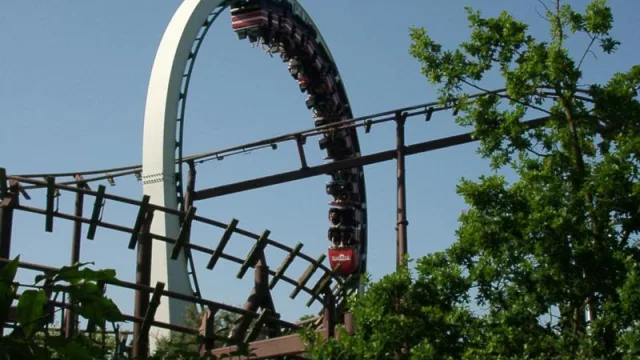
Schwarzkopf Industries GmbH was a German manufacturer of roller coasters, flat rides and transport systems based in Münsterhausen. Under Anton Schwarzkopf, the company evolved from a trailer builder for circus and fair operators into one of the most influential steel coaster manufacturers of the twentieth century. Working closely with designer Werner Stengel, Schwarzkopf introduced compact, smooth and often transportable coasters, including Revolution, Shuttle Loop, Olympia Looping, Alpina Bahn and many Jet Star and Wildcat models.
Schwarzkopf Industries GmbH is linked as manufacturer to 7 active attractions across 6 parks on W8baan.
Share of measured operating time in which the rides were open. Outages and maintenance count as downtime; closed and unknown do not count.
8.7 h measured operating time
604.2 h measured operating time
3,071.7 h measured operating time
Spread of roller coaster lengths based on available RCDB data for this manufacturer's attractions.
3 coasters
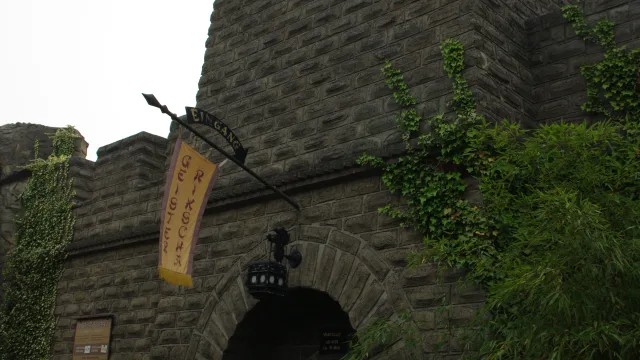
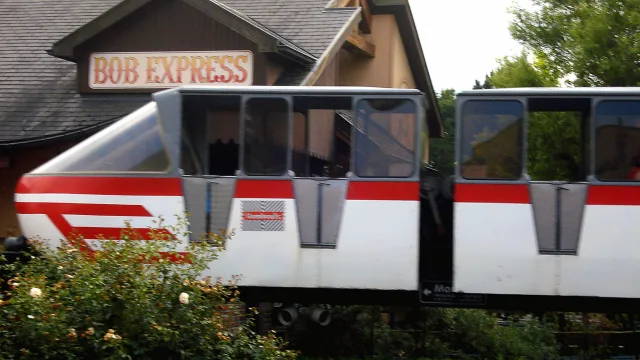
Schwarzkopf Industries GmbH occupies an exceptional place in amusement ride history. The company did not begin as a theme park supplier, but as a family business building trailers, caravans and specialized transport equipment for circuses and fair operators. That background later became an advantage. Anton Schwarzkopf understood what travelling showmen needed: a ride had to be robust, relatively quick to erect, reliable during intense fairground operation and still spectacular enough to draw attention. From 1954 the company moved into amusement rides, and in 1957 Schwarzkopf built its first roller coaster, Düsenspirale. After Anton Schwarzkopf took over the business in 1960 and began working with structural engineer Werner Stengel, one of the most productive technical partnerships in the industry emerged. Schwarzkopf did not primarily sell themed environments; it created an extraordinary ride-mechanical vocabulary: compact steel track profiles, precisely calculated forces, elegant vertical loops, transportable structures and trains known for smooth running. The company supplied parks, travelling fairs and international partners such as Intamin. Many projects were sold under different commercial names or through partners, but Schwarzkopf engineering remained recognizable. Revolution at Six Flags Magic Mountain became famous as a modern looping coaster; Shuttle Loop and Looping Star made inversions more compact and widely applicable; Jet Star and Wildcat gave parks and travelling operators affordable steel coasters with small footprints. Schwarzkopf also built flat rides, Ferris wheels, monorails and dark ride transport systems, including the basis for Geister Rikscha at Phantasialand. The company also suffered severe financial problems. Bankruptcies and reorganizations during the 1980s limited production, and later designs were built by other manufacturers such as Zierer, BHS or Gerstlauer. After the company’s final decline around 1992, parts of its know-how lived on. Maurer took over activities and still supports Schwarzkopf coasters; Gerstlauer grew partly from people and facilities connected with Schwarzkopf. The legacy is therefore larger than the company itself. Schwarzkopf showed that steel coasters could be compact, forceful, elegant and transportable, influencing both fixed amusement parks and European travelling fair culture. That combination explains why Schwarzkopf appeared in very different operating environments. A compact model such as Jet Star suited urban parks and seasonal fairs, while larger travelling coasters demanded logistical expertise rooted in the company’s trailer-building past. In permanent parks, rides such as Lisebergbanan, SooperDooperLooper and Whizzer-type installations became durable crowd favourites, while looping projects in North America and Europe changed public expectations of modern steel coasters. Beyond roller coasters, the company remained technically versatile: monorails, Ferris wheels and transport systems show that Schwarzkopf treated attractions as integrated mechanical products. Its profile is therefore not only that of a coaster builder, but of an engineering firm combining mobility, capacity and ride dramaturgy.
Schwarzkopf’s history begins before the Second World War with Anton Schwarzkopf Sr., who built a company around trailers and equipment for circus and fair customers. In 1954 the business also began working on amusement rides. Three years later Anton Schwarzkopf built Düsenspirale for showman Gottlieb Löffelhardt, linking the Schwarzkopf name to roller coasters for the first time. In 1960 Anton Schwarzkopf took over the family company. The move toward modern steel coasters accelerated in 1964, when Schwarzkopf developed his first larger steel coaster and Werner Stengel became involved as structural engineer. The 1960s and 1970s were the creative peak. Jet Star, Wildcat, Bayern Kurve, Monster and other models became popular with parks and travelling fairs. The partnership with Stengel gained international visibility with Revolution, opened in 1976 at Six Flags Magic Mountain and celebrated as a modern looping coaster. Shuttle Loop, Looping Star, Shock Wave, Mindbender and other projects followed, combining compact layouts with high intensity. In Europe, Schwarzkopf built major transportable coasters such as Alpina Bahn, Dreier Looping, Olympia Looping and Thriller, allowing travelling fairs to offer experiences previously associated with permanent amusement parks. At the same time the company worked with commercial partners such as Intamin, which is why some rides appear in sources under partner names or mixed attributions. Rapid growth created financial pressure. A major bankruptcy followed in 1983; the later years were marked by restarts, cooperation with BHS, Zierer and Gerstlauer, and declining production. After the final collapse around 1992, Schwarzkopf disappeared as a manufacturer, but many designs continued operating and were maintained by successor companies. Anton Schwarzkopf retired in 1995 and died in 2001. His name remained synonymous with elegant, intense steel roller coasters. The later spread of the legacy did not pass through a single successor, but through a network. Some installations were sold, moved or technically modified, while former employees and partner companies carried knowledge into new projects. As a result, the Schwarzkopf name still appears in maintenance files, reopenings, documentaries and enthusiast archives. Its history is therefore not a closed corporate biography, but a continuing technical genealogy within the European and North American coaster world.
Schwarzkopf’s technical reputation rests on three pillars: steel track construction, transportability and dynamic ride quality. The company came from a world in which rides often had to travel. Compact foundations, modular track sections, quick assembly, robust mechanics and maintainability were therefore not secondary issues but basic requirements. In roller coasters this translated into relatively small footprints, welded steel track, compact lift systems, short trains and layouts that delivered strong forces without requiring enormous space. The collaboration with Werner Stengel was crucial. Stengel calculated forces and geometry, while Schwarzkopf understood manufacturing and operating practice. Their vertical loops became famous because they were not simple circles, but shaped to distribute forces more comfortably through the element. Shuttle Loop and Looping Star also showed how major spectacle could fit into a compact structure. For travelling coasters such as Olympia Looping and Thriller, the technical challenge was even greater: the ride had to be large and intense, yet dismantlable, transportable and repeatedly erectable. Schwarzkopf also developed flat rides such as Bayern Kurve, Monster and Enterprise, and built transport systems for monorails and dark rides. Patents for a motorized roller-coaster car and a suspended figure-eight ride show that the company experimented with drive systems and vehicle suspension beyond what was fully commercialized. The lasting technical value lies in the combination of elegance and pragmatism: Schwarzkopf coasters were inventive, but also designed for real operating conditions. The production logic behind that technology was equally important. Schwarzkopf worked with repeatable models that could be adapted to site, operating style and available space. That made spare parts, assembly sequences and inspection routines more manageable than in fully unique prototypes. At the same time there was room for custom work, including large multi-loop travelling coasters and park installations shaped to specific terrain. The patents for powered cars and suspended coaster concepts also show that the company thought in systems: propulsion, vehicle, track, force profile and operation had to function together. This integrated approach is one reason many rides remain maintainable.
Schwarzkopf’s influence on the attractions industry is difficult to overstate. The company proved that steel coasters did not have to be only large park machines; they could also be compact, transportable and commercially viable on travelling fairs. In doing so, Schwarzkopf blurred the boundary between fairground and permanent amusement park. European showmen could offer internationally noticed thrill levels with rides such as Olympia Looping, Alpina Bahn and Thriller. In fixed parks, Schwarzkopf supplied models that lasted for decades and gained cult status, including Whizzer, SooperDooperLooper, Revolution, Montezooma’s Revenge and Mindbender. The collaboration with Werner Stengel influenced the standard for calculated forces, flowing loops and compact layout engineering. Many designers, engineers and manufacturers came directly or indirectly from the Schwarzkopf environment. Gerstlauer, Maurer, Zierer, Intamin projects and BHS constructions show how widely the technical legacy spread. The business history was financially turbulent, but the ride quality remained exemplary. That explains why Schwarzkopf coasters are still fan favorites decades later and are discussed by groups such as American Coaster Enthusiasts as industrial heritage. For modern parks the lesson is clear: elegance, intensity and reliability can create a longer legacy than records alone. Schwarzkopf also influenced how attractions were traded internationally. Through cooperation with Intamin and other partners, German designs could appear in American, Asian and European parks without always being communicated under the same manufacturer name. That made the company history complex, but widened the spread of its technical style. The continuing affection for rides with comparatively simple silhouettes underlines that comfort, pacing and repeatability can matter as much as decoration or height.
Schwarzkopf is no longer active as a manufacturer. The company disappeared after bankruptcies and restructurings, with its final decline around 1992. Yet an operational legacy remains. Many Schwarzkopf rides still operate in parks or as travelling attractions, often after relocations, refurbishments or modernization. Parts supply and support do not come from the original company, but from successor specialists, park technical departments and companies that absorbed knowledge or activities. Maurer explicitly states that it continues to provide service and spare parts for Schwarzkopf coasters after taking over activities around 1993. Gerstlauer is historically connected with the former site and personnel around Münsterhausen. In addition, enthusiast archives, coaster databases and heritage organizations keep documentation alive. Schwarzkopf’s current market position is therefore that of a defunct manufacturer with an active installed base and a strong reputation. For operators, this creates a combination of heritage value and technical responsibility: a Schwarzkopf ride can attract guests, but it requires specialist maintenance, parts knowledge and sometimes modernization of controls, brakes or trains.
Schwarzkopf’s design philosophy was pragmatic, elegant and operator-focused. A ride had to be exciting, but also buildable, transportable, maintainable and commercially sellable. This led to designs with striking technical economy: compact layouts, limited support structures, relatively short trains and elements that extracted a great deal of experience from little space. Rather than chasing records directly, Schwarzkopf sought ride flow. The best coasters feel fast and intense, yet also rhythmic and logical; the passenger experiences force build-up, directional change and release without the layout feeling chaotic. Werner Stengel gave that philosophy mathematical precision. The famous loops and helices were not merely spectacular shapes, but carefully shaped force curves. For travelling operators, design also meant practical discipline: transport weights, setup time, reliability and repeatable assembly determined whether a coaster was truly usable. Schwarzkopf therefore designed from motion rather than decoration. That motion was then made clear, recognizable and smooth enough that many rides still feel modern decades later.
The Schwarzkopf company starts modifying and building amusement rides, marking the practical founding year for the ride manufacturer.
Schwarzkopf builds its first roller coaster, Düsenspirale, for showman Gottlieb Löffelhardt.
Anton Schwarzkopf assumes leadership of the family company.
Schwarzkopf begins a long engineering partnership with Werner Stengel and develops larger steel coaster designs.
Revolution opens at Six Flags Magic Mountain and becomes a landmark modern looping coaster.
Compact looping models such as Shuttle Loop and SooperDooperLooper expand Schwarzkopf’s international influence.
Schwarzkopf looping technology spreads through major US parks.
Phantasialand opens Geister Rikscha, a dark ride using a Schwarzkopf transport system.
Schwarzkopf suffers a major bankruptcy after rapid growth and intense competition.
A large transportable steel coaster becomes one of the defining European travelling rides.
A triple-looping transportable coaster debuts, later travelling and operating under several names.
Schwarzkopf and Stengel’s large transportable multi-loop coaster appears on the European fair circuit.
Anton Schwarzkopf receives a patent for a suspended ride concept that was not commercialized as a major product line.
BHS builds the Schwarzkopf/Stengel five-loop transportable coaster Olympia Looping.
The original Schwarzkopf manufacturer disappears after further financial difficulties and successor arrangements.
Maurer enters coaster development after taking over activities associated with BHS / Anton Schwarzkopf.
Anton Schwarzkopf dies, leaving a substantial technical and cultural legacy in the coaster industry.
American Coaster Enthusiasts highlights Schwarzkopf’s historical impact through the Legacy of Schwarzkopf project.
Anton Schwarzkopf Sr. establishes a business supplying trailers and transport equipment for showmen and circus customers.
Travelling / Wiener Prater · 1957
Multiple travelling fairs and parks · 1964
Lagoon · 1976
Six Flags Magic Mountain · 1976
Hersheypark · 1977
Six Flags Great America · 1976
Knott’s Berry Farm · 1978
Walibi Belgium · 1982
Six Flags Over Texas · 1978
West Edmonton Mall / Galaxyland · 1985
Liseberg · 1987
Travelling / Wiener Prater · 1989
Travelling fair circuit · 1983
Travelling / various parks · 1986
Travelling / Indiana Beach · 1984
Phantasialand · 1981
Attractiepark Slagharen · 1969
Attractiepark Slagharen · 1981
Travelling fairs and parks · 1960s
Travelling fairs and parks · 1970s
7 linked attractions