Company profile
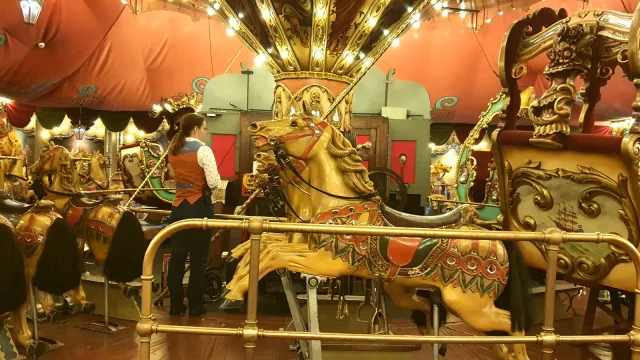
Hendrik Janvier occupies an unusual place in attraction history. He was not a manufacturer in the modern sense of a company with catalogue models, engineering departments and serial production. He was a travelling fairground entrepreneur, builder, assembler and operator who began developing a large salon steam carousel around 1895. That installation did not come from one factory. It emerged from entrepreneurship, technical knowledge, artistic judgement and components produced by specialist makers. This is exactly why Janvier belongs in an encyclopaedic manufacturer profile: his name is attached to a specific attraction that still operates and shows the transition from travelling fair culture to permanent theme park heritage. The Stoomcarrousel that has stood at Efteling since 1956 began as Janvier s travelling salon carousel. Sources place its construction period between 1895 and 1903. The machine combined a steam centre engine, wooden horses, gondolas, coaches, a richly decorated facade and a Gavioli organ. Several components came from other specialists, but the complete attraction was assembled, enlarged and operated under Janvier s entrepreneurship. His contribution was therefore not only mechanical, but also conceptual. The carousel functioned as a mobile amusement building: a place where rotation, music, light, decoration, hospitality style atmosphere and social gathering came together. At Efteling the carousel later gained a new meaning. When the park acquired the installation in the 1950s, it became the first covered attraction outside the Fairytale Forest and an important step in the young park s broadening identity. Today, Janvier stands not only for a historical maker, but also for the value of preservation, restoration and reinterpretation of fairground heritage within modern parks. His profile should be read as that of a historical attraction pioneer: a person who built, operated and culturally shaped a travelling attraction before the modern amusement ride industry existed as a separate sector. This also makes the profile methodologically unusual. With modern manufacturers, a database can often compare product lines, catalogues and dozens of installations. With Janvier, the encyclopaedic value lies in one surviving object that contains several layers at once. It is a fairground ride, a family business history, a technical ensemble, a musical object and part of Efteling s identity. The origin in Bergen op Zoom explains its close link with Dutch fairground tradition, while its later placement in Kaatsheuvel shows how older amusement forms could be preserved inside a theme park context. For visitors the attraction is accessible and family oriented; for researchers it is a rare source on transport, decoration, labour and public entertainment around 1900. That is why Janvier deserves a full W8baan profile despite having a limited known portfolio.
History
The history of Hendrik Janvier begins in the fairground culture of Bergen op Zoom. Sources on the Janvier family identify Johannes Wilhelmus Janvier as an early carousel owner and describe how his son Hendrik, born in 1868, travelled from a young age with an open carousel and wooden horses to fairs and annual markets. He therefore learned the trade not in a factory, but on the road: building up, dismantling, negotiating, maintaining equipment, attracting an audience and responding to new technical possibilities. In 1881 he married Fientje Ditvoorst and the family grew into a large fairground dynasty. From 1895, Hendrik Janvier began building his own steam carousel. The installation was completed around 1903 and did not remain fixed afterwards. Salon steam carousels were living ensembles that changed over the years with new facades, decorations, organs, horses, gondolas and technical solutions. Janvier later passed the carousel through the family. His son J.W. Janvier received the attraction around the time of his marriage and worked with artist Andreas Giezen on paintings and decoration. Piet Janvier acquired the Gavioli organ that still forms a central element. Laurens Janvier later became owner and toured with the carousel into the 1950s. The post war fairground world was changing, however: operating costs rose, income declined and transporting and assembling such a large installation demanded extensive labour. In 1955 the carousel was sold to Efteling. Since 11 May 1956 it has operated in Kaatsheuvel, first as the centerpiece of the Carrouselpaleis and later as a heritage object within a much larger theme park. The Janvier name therefore remains tied to both travelling fairground history and the permanent park history of the Netherlands. The later park phase is equally important. Through Efteling s purchase, the carousel was not only saved as a machine, but also placed inside a new public story. It remained recognizable as Janvier heritage while becoming part of a growing theme park that used nostalgia as a building block for new experiences.
Innovation and technology
The technical importance of Hendrik Janvier lies in bringing existing specialist techniques together into a working travelling attraction. The Stoomcarrousel was not a standardized factory product, but an assembled system in which drive, support structure, vehicles, music, decoration and operating practice had to be coordinated. The heart of the historical installation was steam power. Sources describe a central steam engine connected to mechanical transmission under the floor, allowing the platform to rotate. The ride was later converted to electric drive, while the steam engine remained as a historical element. The ride experience was not created by rotation alone. Horses, gondolas and coaches moved through mechanisms below the platform, with gears, rods and eccentrics giving motion to the figures. Music was an integrated technical and atmospheric component. The Gavioli organ, built in the same period, used book music and defined the sound identity of the attraction. Vehicles and decoration came from several specialists, including woodcarvers and artists. Technically, the carousel therefore resembles an assembled mobile building more than a single ride system. For Janvier, engineering was also inseparable from logistics. The installation had to be built up, dismantled, transported and levelled again at each fair. That required robust connections, repeatable assembly order, skilled staff and an operating model capable of supporting heavy labour. The innovation was therefore not a patent or one isolated mechanical element, but the integration of steam power, showmanship, transportability and salon atmosphere. The scale of operation was technically decisive as well. Sources mention a large facade, substantial staff and repeated transport. An error in levelling or assembly could affect the motion of the figures. The attraction was therefore as much a process as an object.
Industry impact
Hendrik Janvier s influence is primarily cultural and historical, but that makes it no less important for the amusement industry. His steam carousel belongs to a period when travelling fairground attractions were among the largest and most impressive forms of popular entertainment. Before theme parks built large permanent rides, such carousels were mobile total experiences combining engineering, music, decoration and social space. Janvier showed that a fairground attraction could be more than a simple merry-go-round: it could become a salon, a travelling palace and the signature of a family enterprise. Efteling s later acquisition gave that heritage a second life. In 1956, the Stoomcarrousel helped the young park present a covered attraction with nostalgic prestige outside the Fairytale Forest. A travelling fair installation thus became part of theme park history. For modern parks, Janvier s legacy matters because it shows that preservation and authenticity can themselves create attraction value. The installation proves that historical technology, when carefully restored and operationally managed, can continue to offer a visitor experience alongside modern ride systems. His influence is therefore not a series of new models, but an example of craftsmanship, operation and heritage coming together. Within W8baan, Janvier also helps prevent older ride types from being reduced to curiosities. His carousel shows how complex and capital intensive historical fairground attractions could be.
Current operations
Hendrik Janvier is no longer an active manufacturer and there is no modern company organization around his name. The relevant operational heritage is now carried by Efteling, where the Stoomcarrousel is maintained as an operating park attraction. The carousel runs electrically, but retains the historical steam engine, salon structure, decorative appearance and Gavioli music as important experience elements. Current operations are therefore primarily about preservation, daily maintenance, visitor safety and interpretation of historical technology inside a modern park. For guests the attraction functions as a family carousel, while for an encyclopaedia it is also a living museum piece. Janvier s current market position cannot be compared with that of a contemporary manufacturer. His importance lies in the survival of a historical installation that remains linked to an active park. Available sources do not indicate new Janvier projects, licences or active commercial activity. The relevant operation is therefore entirely heritage focused and lies in preserving the existing carousel.
Design philosophy
The design philosophy visible in Janvier s work is one of total fairground experience. The attraction was not meant merely to rotate, but to impress, invite and create a place to stay. A salon steam carousel was machine, music stage, decorative object, meeting place and status symbol at the same time. Janvier therefore built an experience in which technology could remain visible, but always served atmosphere. The steam engine, organ, richly painted panels, horses, gondolas and facade together formed a mobile palace. This differs from modern thrill engineering, where performance figures often dominate. Janvier s logic was based on splendour, recognisability, social attraction and repeatability at each fairground location. The continued strength of the Stoomcarrousel at Efteling shows how effective that principle remains. The ride works not through speed or surprise, but through rhythm, nostalgia, craftsmanship and the feeling that visitors temporarily become part of a historical performance. That explains why the attraction still convinces in a modern park.