Company profile
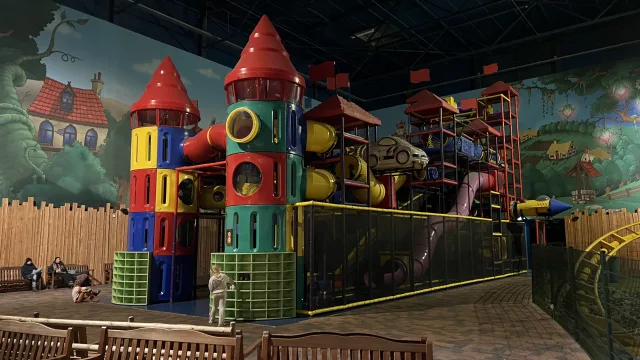
eibe Benelux B.V. is not a conventional roller coaster manufacturer within W8baan, but a specialist supplier of play attractions and themed play worlds that can be important in family parks. The company serves the Dutch and Belgian markets from Zoetermeer and Geel and belongs to the wider eibe group, a German family business headquartered in Röttingen. Official eibe sources present the group as a manufacturer and developer of playground equipment for public playgrounds, schools, childcare facilities, campsites, hotels, recreation parks, zoos and theme parks. Its core business is the creation of safe, durable and inviting play environments where children can climb, balance, slide, crawl, role-play and explore together. For the amusement industry, eibe becomes relevant when a park needs more than ride capacity: younger guests need low-threshold places to move freely, while parents and families benefit from areas that extend dwell time within a themed zone. Speelkasteel in Toverland’s Land van Toos is the W8baan example. This indoor play attraction opened in 2001 and is presented as a colourful castle with towers, obstacles, slides and layered play elements. Toverland describes Land van Toos as an indoor world for younger visitors, while specialist attraction sources identify eibe Benelux as the manufacturer of Speelkasteel. The company therefore belongs to the ecosystem around family attractions, even though it does not build coasters, dark rides or transport systems. eibe works from a broader portfolio that includes play units, themed play structures, climbing and gym equipment, sand and water play, play houses, dynamic units and outdoor sports. Official reference projects show that the company also delivers custom work for leisure destinations, including the Sawmill play world at Erlebnispark Tripsdrill, the Santa Monica playground at Movie Park Germany and Villa Lustigheim for Wunderland Kalkar. These projects illustrate how playgrounds in parks are increasingly designed as a complete experiential layer: not just equipment, but scenery, story setting, physical challenge and family dwell space at the same time. For W8baan, eibe Benelux is therefore best understood as a specialist in themed, safe and heavily used play landscapes within broader family entertainment. A key distinction is that eibe does not primarily operate from a catalogue of fixed ride models, but from playground architecture. The value of a project is shaped by how routes, heights, materials, age targets and supervision come together. In a park context this can make an area function more calmly: children choose their own tempo and route, while accompanying adults keep sightlines and the theme remains intact. In indoor venues such as Toverland, that is especially relevant because a play world also provides capacity and dwell value in poor weather. The Benelux branch links local client support with the product and design experience of the German group.
History
The history behind eibe Benelux has two layers: the German eibe group and the Dutch Benelux company. Official eibe information traces the family tradition back to the Eichinger name in Röttingen, where the business grew from a carpentry background. In 1975 the eibe name was officially adopted, marking the evolution from a craft-based wood tradition into a recognisable manufacturer of playground equipment. The company remained in family ownership; eibe states that Tilo Eichinger has owned the business since 2005 and continues the family tradition. The legal and regional history of eibe Benelux is more recent. Business data sources list eibe Benelux B.V. as incorporated or registered in 1993 and based in Zoetermeer. From that Dutch base, the company serves the Benelux market, with an additional correspondence address in Geel for Belgium. Its role in amusement parks grew from the same specialism as in public playgrounds: designing, supplying and installing safe play environments with high play value. Speelkasteel at Toverland opened on 19 May 2001, the same year Toverland began as an indoor family attraction. eibe Benelux therefore belongs to the early suppliers of the park’s playful foundation layer. In later years the wider eibe group continued to realise visible leisure projects, including the Sawmill play world at Tripsdrill in 2019 and Villa Lustigheim for Wunderland Kalkar. These projects show how the company translated playground knowledge into themed leisure environments with larger scale, decorative detail and park-level guest capacity. The move into leisure projects was not a separate change of direction, but an extension of existing knowledge. Playground equipment for schools and municipalities already requires standards, durability, supervision and maintainability. Recreation parks add thematic recognition, higher visitor intensity and longer dwell time. Speelkasteel fits precisely into that transition: a playground that appears as an attraction on the park map and becomes part of the identity of a themed area. Later references show that eibe could apply the same approach at larger and more decorative scale without losing the basic idea of free play.
Innovation and technology
The technology of eibe Benelux is not about drives or track profiles, but about play value, material selection, structural safety and spatial planning. Official eibe sources emphasise manufacturing according to DIN EN 1176, TÜV certification and attention to EU safety requirements. In large play worlds this means that fall heights, impact zones, climbing routes, sightlines, access points, age groups and maintenance reach are considered from the design phase onward. eibe uses many timber types, including robinia, larch, pine and large-diameter round wood, combined with nets, slides, panels, water play features and dynamic elements. The technical challenge in a recreation park is that equipment is used intensively by many different ages, often without a fixed ride cycle. Capacity therefore does not come from trains per hour, but from distributed play points, multiple routes, parallel climbing options and smooth movement between zones. In references such as Villa Lustigheim, Sawmill and Santa Monica, the engineering is integrated into a decorative theme. Stairs, net bridges, crawl tunnels, balancing elements, tube slides and water play are designed to support story, motion and inspectability at the same time. eibe also supplies planning, scaled drawings or 3D visualisations, installation and project support, allowing technical design and landscape integration to be treated together. Risk management in play attractions differs from mechanical rides. The user moves independently, so designers guide behaviour through shape, gradient, grip, handrails, net structure, surface and visibility. A climbing element has to offer challenge while remaining predictable for inspectors and operators. Materials must withstand weather, moisture, heavy loading, cleaning and wear from constant contact. In park applications, designers also consider routing around the structure, waiting space for accompanying adults, themed edges and links to food outlets or nearby attractions. The technical discipline is therefore a blend of playground construction, landscape design, safety engineering and guest-flow management.
Industry impact
The influence of eibe Benelux on the amusement industry is niche-focused but meaningful. Play areas are often discussed less visibly than roller coasters or dark rides, yet they strongly shape how families experience a park. They absorb differences in age, give young children independent activity and make themed areas valuable beyond ride cycles. With Speelkasteel, eibe Benelux supplied part of Toverland’s original foundation as an indoor family destination. The wider eibe group shows through Tripsdrill, Movie Park Germany and Wunderland Kalkar that themed play worlds can function as full park components. The impact therefore lies in the professionalisation of play: safety, material durability, thematic coherence, capacity and social interaction are not treated separately, but brought together in one design approach. For family parks, holiday parks and indoor leisure venues, that development is highly recognisable. That contribution is especially visible in parks designed for young families. A strong play area can reduce pressure on ride queues, keep siblings of different ages together and make a visit less dependent on height restrictions or ride anxiety. For parks such as Toverland, which began from an indoor family base and later added larger thrill attractions, such a layer is essential: the park remains usable for the youngest audience while the offer grows. eibe’s leisure references also show that specialist playground builders increasingly contribute to storytelling, photo value and brand recognition. The playground therefore moves from supporting facility to programmable attraction component.
Current operations
eibe Benelux operates from Zoetermeer and also publishes a Belgian correspondence address in Geel. The company sells, designs and installs playground equipment, toddler gardens, children’s sports goods and play materials for the Benelux market. According to its own information, the international eibe group has more than 300 employees worldwide and branches or partners in several European countries. Current operations focus on complete playground concepts, custom work for recreation parks, professional installation, catalogue products and advice on safety, layout and material selection. For park operators, the relevant point is that eibe supplies indoor and outdoor concepts that can be integrated into a theme and used in busy family environments. The website and reference pages show recreation parks, hotels, campsites, schools and municipalities among its active customer groups. In the Benelux, the company appears to operate mainly as an advisory, sales, design and delivery organisation. That means it supplies equipment, but also contributes to project choices around site, target group, layout and installation. Official contact details show a Dutch main location in Zoetermeer and Belgian accessibility through Geel. The German group website supports international distribution, products and reference communication. For W8baan, it is important that the eibe Benelux name appears on one active Toverland attraction, while much of the technical and historical context comes from the wider eibe group.
Design philosophy
The design philosophy of eibe Benelux starts from play as a physical, social and imaginative activity. In this approach, a good play environment must be more than attractive: it should offer routes, levels of difficulty and points of encounter. In theme parks, this means that the structure should fit recognisably within the story of the area while still allowing children to create their own play. Timber, natural forms, colour and decoration are combined with regulated safety and inspectable construction. eibe identifies movement, responsibility, service, nature and the environment as core values. Its strongest projects, such as Speelkasteel, Sawmill and Villa Lustigheim, show that play equipment can be scenery, physical challenge and family dwell space at the same time. Instead of creating one prescribed ride sequence, eibe builds situations in which children make choices. A child can climb, wait, watch, go back, try another route or enter a role-play story. That requires design that offers freedom without becoming unclear. For park designers this is valuable because a play world encourages repeat use within the same visit: the same structure can be used differently each time. The philosophy also supports inclusion and age spread, because several routes and difficulty levels can coexist. In strong projects, the boundary between equipment and scenery almost disappears.