Company profile
Blackpool Pleasure Beach, now outwardly branded as Pleasure Beach Resort, is an unusual entry in a manufacturer database. The company is primarily a family-owned amusement park and resort on Blackpool’s South Shore, but it also has a long record of constructing, rebuilding, restoring and technically managing rides in-house. For that reason, the name appears in attraction data as a manufacturer or builder for rides that were made, assembled, rethemed or maintained as technical assets of the park itself. In W8baan this applies most directly to Derby Racer, Impossible and Rugrats Lost River.
The origin lies in 1896, when William George Bean founded the Pleasure Beach Company and, together with John Outhwaite, created the basis for an American-style amusement park on the British coast. The business became one of Europe’s most historically important amusement parks. Unlike many modern parks that buy nearly every technical system from outside suppliers, Blackpool built its identity through a mixture of imported rides, park workshops, local adaptation and continuous renovation.
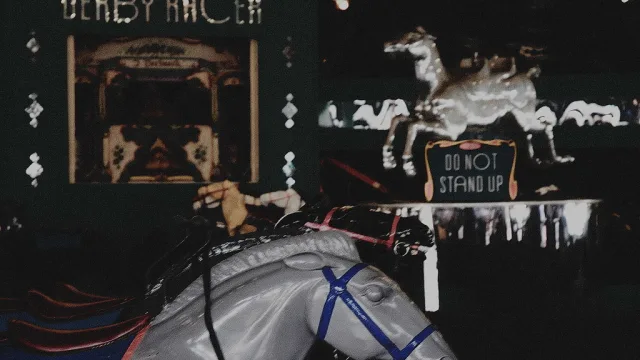
That practice is visible in the three active W8baan-linked attractions. Derby Racer, opened in 1959, is a classic example of the park’s internal craft tradition: official anniversary material states that its 56 horses were hand-carved at Blackpool Pleasure Beach. Impossible, opened in 2002, combines older mirror-maze and Haunted Swing material into an illusion house, with sources tracing its roots to 1001 Troubles and the earlier swing. Rugrats Lost River grew from the park’s log-flume lineage and was rethemed for Nickelodeon Land in 2011.
As a company, Pleasure Beach Resort is most important for preserving historic ride forms. Sir Hiram Maxim’s Flying Machines, River Caves, Big Dipper, Grand National, Ghost Train, Blue Flyer, Steeplechase and Derby Racer give the park a concentration of heritage rarely matched in Europe. At the same time, it has continued to invest in outside manufacturers including Arrow, Mack, Vekoma, S&S and Intamin. This profile should therefore not be read as that of a normal ride supplier, but as that of a historic park operator with its own technical culture, rebuilding capacity and exceptional role in preserving British amusement-ride history.
That hybrid role is what makes the company relevant as a manufacturer profile. The confined seaside site forced the park to stack attractions tightly, reuse existing routes and keep mechanical installations available for several generations. Internal know-how therefore became as important as buying new hardware. The result is a technical culture in which operation, restoration, theming and practical engineering constantly overlap. Blackpool Pleasure Beach represents a type of manufacturer that mainly produces within its own gates: not through catalogue models, but through workshop decisions, rebuild projects and long-term stewardship of complex installations.
History
The history of Blackpool Pleasure Beach begins in the 1890s on Blackpool’s South Shore. John Outhwaite was already operating a steam carousel, while William George Bean founded the Pleasure Beach Company in 1896 with the ambition of building an American-style amusement park. Bean had been inspired by American fun parks and wanted to create a place where adults could feel like children again. In 1903, Bean and Outhwaite acquired additional land, allowing the park to grow from a loose fairground into a permanent seaside amusement park.
The early decades established the technical heritage. Sir Hiram Maxim’s Flying Machines opened in 1904, River Caves followed in 1905 and wooden coasters such as Big Dipper and Grand National made the park a centre of European coaster culture. The combination of imported equipment, local adaptation and in-house maintenance became a recurring pattern. The park workshops and technical teams had to operate, repair and adapt rides for a harsh seaside climate, heavy visitor numbers and long seasons.
After the Second World War, a new investment period began. Wild Mouse opened in 1958 and Derby Racer in 1959. Derby Racer is especially important for the in-house profile because its horses were carved at the park itself. In the 1960s and 1970s, dark rides, water rides and major thrill rides followed, including the log-flume lineage, The Gold Mine, Steeplechase and Revolution. Under Geoffrey Thompson, the park became more internationally ambitious, with The Big One in 1994 and Valhalla in 2000 as major technical milestones.
In the 21st century, the emphasis shifted toward a combination of heritage, IP retheming and renovation. Impossible brought older illusion-house elements together, Nickelodeon Land reframed existing family rides and Icon showed that the park could still introduce modern coaster technology. In 2024, the public name broadened to Pleasure Beach Resort. Launch Pad and Aviktas show how the company now renews existing hardware while also adding large new thrill installations, with historic rides still central to its identity.
Innovation and technology
Blackpool Pleasure Beach’s technical identity is not based on one patented product, but on the long-term management of a highly diverse ride fleet. The park combines early 20th-century wooden coasters, classic dark rides, water rides, carousels, modern steel coasters, shot towers and large pendulum rides. This requires a different technical culture from a serial manufacturer: maintenance, inspection, restoration, retracking, thematic rebuilding and integration of external components are central.
The park-attributed rides show that practical approach clearly. Derby Racer depends on traditional woodworking, mechanical carousel technology and preservation of a rare Derby Racer format. Impossible uses spatial illusion, mirrors, classic haunted-swing principles and walkthrough logic. Rugrats Lost River shows how existing log-flume infrastructure can be adapted through theming and operational changes for a new audience. These are not standard export products, but site-specific systems kept alive by internal knowledge.
Another technical feature is reuse. Infusion was relocated from Southport, The Gold Mine became Wallace & Gromit’s Thrill-O-Matic, Ice Blast became Launch Pad and River Caves is receiving a modern reimagining. The park works with outside suppliers, but its long-term value comes from project control, asset management and historical awareness. Technically, Blackpool is a case study in lifecycle engineering: rides continue functioning for decades because maintenance, renovation, operating procedures and story continuity are treated together.
A recurring technical feature is adaptability. The organisation works with installations of very different ages, standards and suppliers, so documentation, spare parts, local fabrication and experience-based knowledge all matter. In rebuilds and rethemes the emphasis is on preserving capacity and recognisability while control systems, safety interfaces, scenic treatment and guest routing are modernised.
Industry impact
Blackpool Pleasure Beach has influenced the attraction industry as a living archive and testing ground for seaside park technology. The park showed that an independent family business can do more than buy rides: it can preserve, adapt, reuse and reframe them. That approach has shaped many British and European discussions about heritage rides, especially the idea that old systems need not automatically be replaced if they still carry identity, capacity and public affection.
The collection is important to coaster and dark-ride history. Big Dipper and Grand National received international recognition as historic wooden roller coasters. Sir Hiram Maxim’s Flying Machines, River Caves, Ghost Train, Derby Racer and Steeplechase represent ride forms that have disappeared from many other parks. By keeping these installations operating or visible, Blackpool preserves technical knowledge that would otherwise mainly survive in archives.
At the same time, the park has not avoided major modern investments. The Big One brought record-scale steel coaster ambition to Britain in 1994, Valhalla became internationally known as a water dark ride and Icon introduced a modern Mack launch coaster into a historic park environment. That tension between heritage and innovation is the real impact: Pleasure Beach shows that a park with very old ride infrastructure can remain relevant through careful maintenance, reuse and targeted technical reinvention.
Current operations
Pleasure Beach Resort operates from 525 Ocean Boulevard in Blackpool and remains a family-run resort with amusement park, hotels, shows, Nickelodeon Land, restaurants and events. The official website presents the park in 2026 as an active resort with ten roller coasters, several dark rides, water rides and new additions such as Aviktas. The company uses the Pleasure Beach Resort name, while Blackpool Pleasure Beach remains widely recognised in databases, trade sources and visitor culture.
The current technical strategy combines preservation and renewal. River Caves is being reimagined, Launch Pad has been rebuilt from Ice Blast and Aviktas has been added as a new Intamin Gyro Swing. Classic attractions such as Derby Racer, Flying Machines, Grand National and Big Dipper remain essential to the brand identity. The park therefore functions simultaneously as operator, heritage steward and in-house technical project team.
That combination requires daily coordination between operations, engineering, marketing and heritage care, because each investment has to support guest value, maintainability and historical continuity at the same time.
Design philosophy
Blackpool Pleasure Beach’s design philosophy is shaped by continuity. Where many parks place a completely new layer over the previous generation, Blackpool tries to let historic attractions coexist with new investments. The result is not a uniformly themed park, but a dense urban seaside park where old wooden coasters, classic dark rides, Nickelodeon family rides and modern thrill machines cross over one another.
For the park-attributed attractions, usefulness and character matter more than standardisation. Derby Racer remains valuable because it makes craft and nostalgia visible. Impossible uses simple illusion technology to preserve an older attraction type. Rugrats Lost River shows how existing hardware can receive a new IP context. The core idea is preservation through use: rides remain meaningful by being maintained, adapted and placed back into the evolving story of the park.
Projects are therefore judged by more than novelty alone: each change has to fit the site’s density, the memory of repeat visitors and the technical life cycle of the resort.